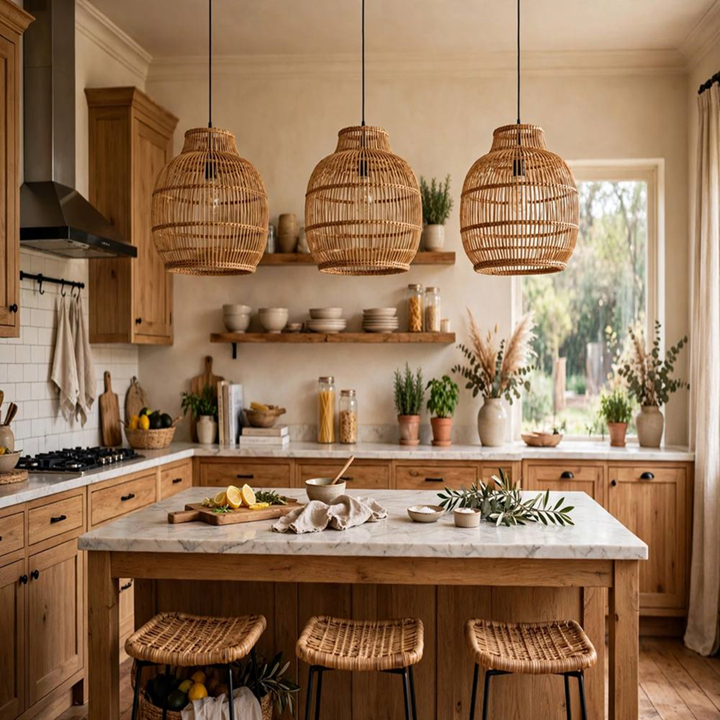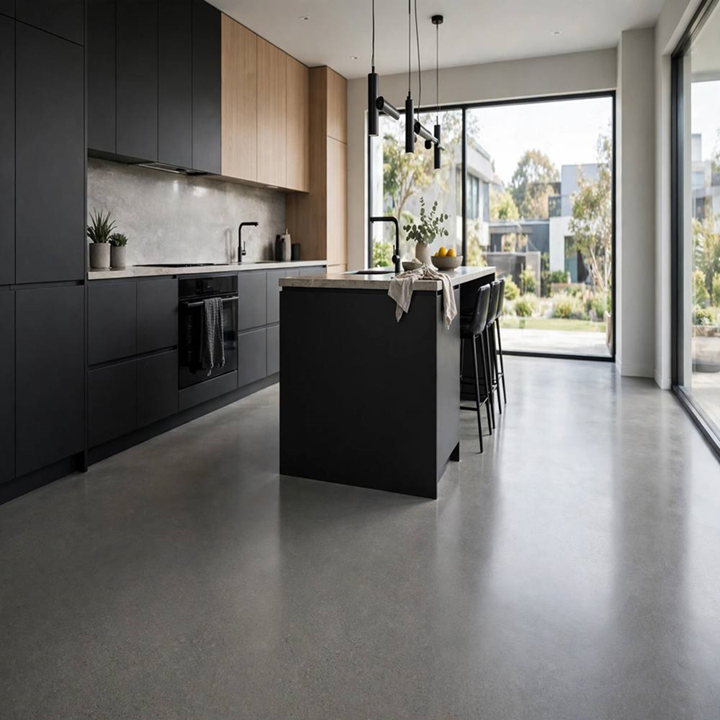
15 Kitchen Storage Ideas to Maximize Every Inch
A kitchen with smart storage feels calm even on a chaotic Tuesday night. Pots slide out smoothly, spices sit at eye level, and the counters stay clear enough to roll out dough. These kitchen storage ideas focus on practical upgrades that suit real American homes, from compact apartments to busy family kitchens. Each suggestion solves a specific daily frustration. You will also find a comparison table, a realistic cost breakdown, and answers to the questions people ask most.
Why Smart Storage Is Driving Kitchen Design in the US
Homeowners now ask their kitchens to do more than ever, from cooking and homework to remote work and entertaining. Open floor plans put every cluttered counter on display, so hidden storage has become a top priority. Deep drawers are replacing lower shelves, and tall pantry cabinets are replacing awkward corner closets. Rising remodel costs also push many families to upgrade inside their existing cabinets rather than rebuild. The trend is clear: people want kitchens that look calm and work smoothly.
Deep Drawers for Pots, Pans, and Bowls
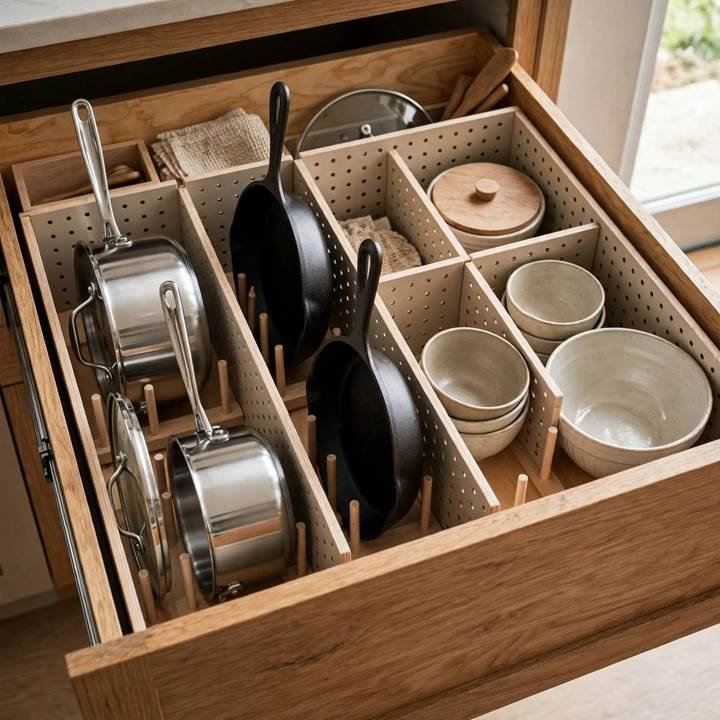
Deep drawers beat lower shelves for everyday cooking because you can see everything at once. Instead of kneeling and digging, you pull the drawer open and grab the pan you need. Deep drawers hold heavy cookware, mixing bowls, and small appliances with ease. Choose full extension, soft close slides rated for heavy loads, and add pegboard dividers to keep lids and pans in place. Store the items you use daily in the drawers closest to the stove.
Pull Out Pantry Cabinet

A narrow cabinet can hold far more than you expect. A pull out pantry slides from a slim gap beside the fridge to reveal shelves of cans, oils, and spices, all visible from the front. This design stops you from buying duplicates and reduces food waste. Look for sturdy wire or wood baskets and soft close hardware. If you cannot build a permanent unit, a slim rolling cart tucked between the refrigerator and the wall offers a similar benefit for far less money.
To read more trending ideas click here.
Floor to Ceiling Cabinets

Wasted wall space is the most common storage mistake. Running cabinets all the way to the ceiling adds an entire extra shelf and removes the dusty gap above your uppers. Ceiling height cabinets are perfect for holiday platters, large serving bowls, and appliances you use a few times a year. They also draw the eye upward, so the room feels taller and more custom. Keep a slim step stool nearby, and store everyday items at eye level.
Corner Cabinet Solutions
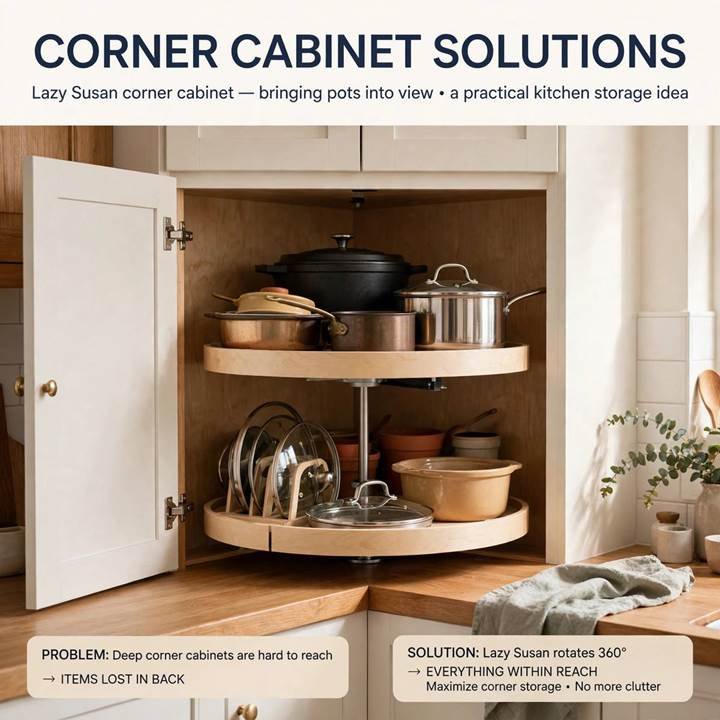
Corner cabinets often become black holes where forgotten containers disappear. A lazy Susan spins to bring every item into reach, while a blind corner pull out slides shelves out into the open. Both options turn dead space into valuable storage. Group similar items together, such as baking supplies on one tier and oils on another. Choose models with a raised lip so bottles do not slide off. Once installed, you will wonder how you ever lived without them.
Vertical Tray and Baking Sheet Dividers
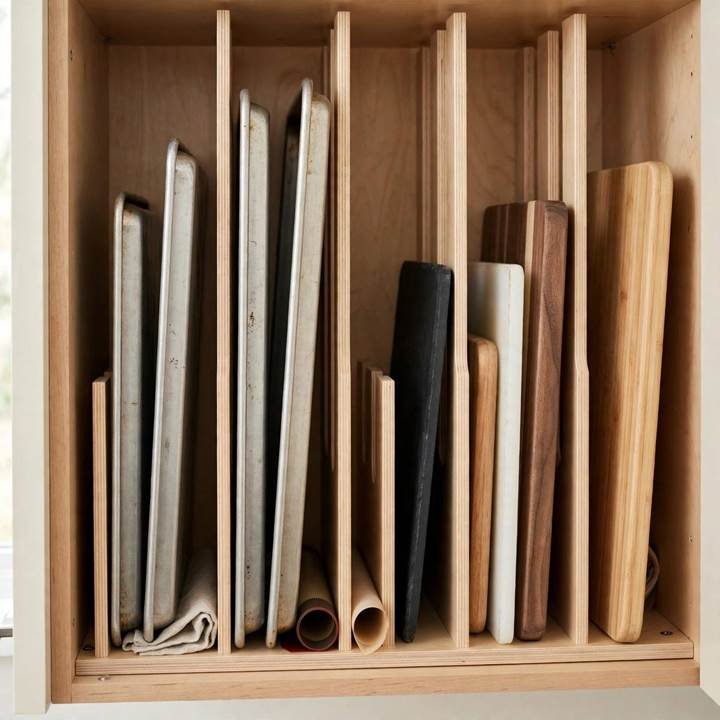
Baking sheets, cutting boards, and platters are awkward to stack, and they rattle every time you reach for one. Vertical dividers store them on their sides like files in a cabinet, so you can slide out exactly what you need. Install a narrow cabinet above or beside the oven, or add dividers inside an existing shelf. This simple change frees up shelf space and protects nonstick coatings from scratches. It also makes weeknight cooking feel a little more organized.
Open Shelving with Baskets and Bins

Open shelves lighten a heavy wall of cabinets and let you display the pieces you love. They work best when paired with storage baskets that hide less photogenic items, such as dish towels, takeout menus, and kids’ lunch boxes. Keep everyday plates and glasses within easy reach, and leave a little space between objects so the look stays airy. Because grease settles quickly on exposed surfaces, wipe the shelves weekly and keep rarely used items behind doors.
Wall Rails, Hooks, and Magnetic Strips

When counters are crowded, walls become your best storage. A stainless or brass wall rail keeps ladles, whisks, and measuring cups within reach, while a magnetic strip holds knives safely and visibly. This setup also frees up drawers for bulkier items. Group tools by task and leave gaps between groups, so the wall looks curated instead of crowded. Mount everything at a comfortable height, and keep sharp tools well out of reach of small children.
Appliance Garage for Clear Counters

Small appliances create the biggest counter clutter, so give them a hidden home. An appliance garage is a small cabinet with a roll up or lift up door that conceals the toaster, blender, and coffee maker. If you cannot build one, a deep drawer or a lower cabinet with a pull out shelf works nearly as well. Add a power strip inside so appliances plug in without cords snaking across the counter. The result is a calm, open surface ready for real cooking.
Island with Built In Storage
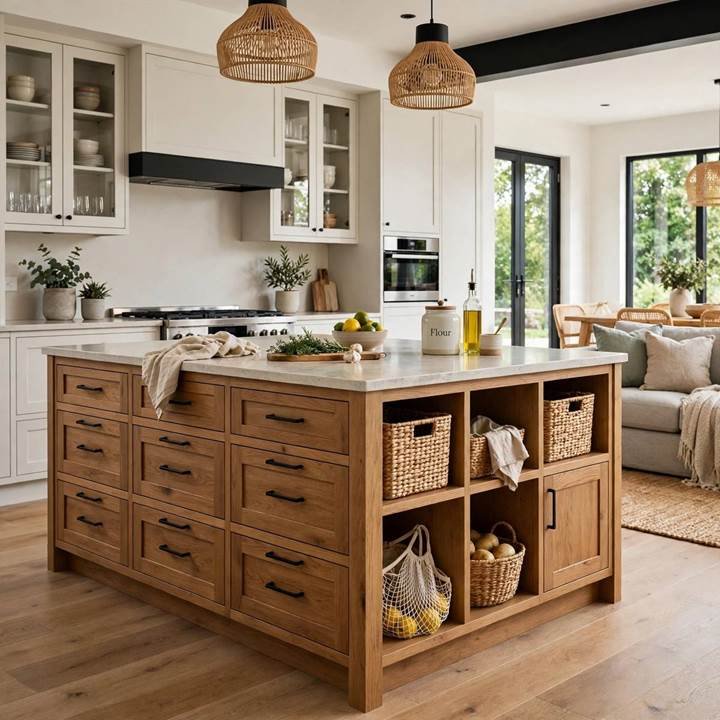
An island does far more than add counter space. Its base can hold deep drawers, pull-out trash bins, wine storage, and even a hidden microwave shelf. Island storage works especially well on the side facing the cooking zone, where you reach for tools constantly. Add slim cabinets on the seating side for cookbooks and serving pieces. Plan storage around what you use daily, and put heavy items in low drawers. A hardworking island can replace an entire wall of cabinets.
Under Sink Organizers and Pull Out Bins
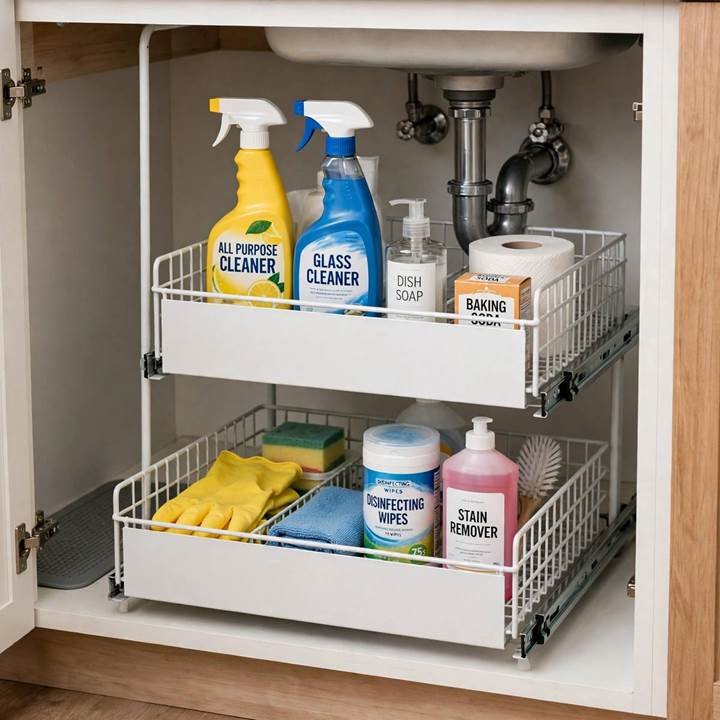
The cabinet beneath the sink is awkward, with pipes in the way and a damp, crowded interior. Slim under sink organizers work around the plumbing and hold cleaning sprays, sponges, and dishwasher pods in neat rows. Use a pull out caddy for daily supplies and a small bin for backups. Add a waterproof mat to catch leaks and protect the wood. Check the space monthly, and toss anything that has expired or leaked.
Door Mounted Racks and Cabinet Door Storage

The back of a cabinet door is free real estate. A slim door mounted rack holds foil, wrap, parchment, and sandwich bags in one tidy spot, so drawers stay free for bigger items. Inside pantry doors, shallow baskets hold snacks, spice packets, and small jars. Test the door’s clearance before installing, and confirm the hinges can support the extra weight. This small change clears a surprising amount of space without altering the cabinet.
Clear Pantry Containers and Labels
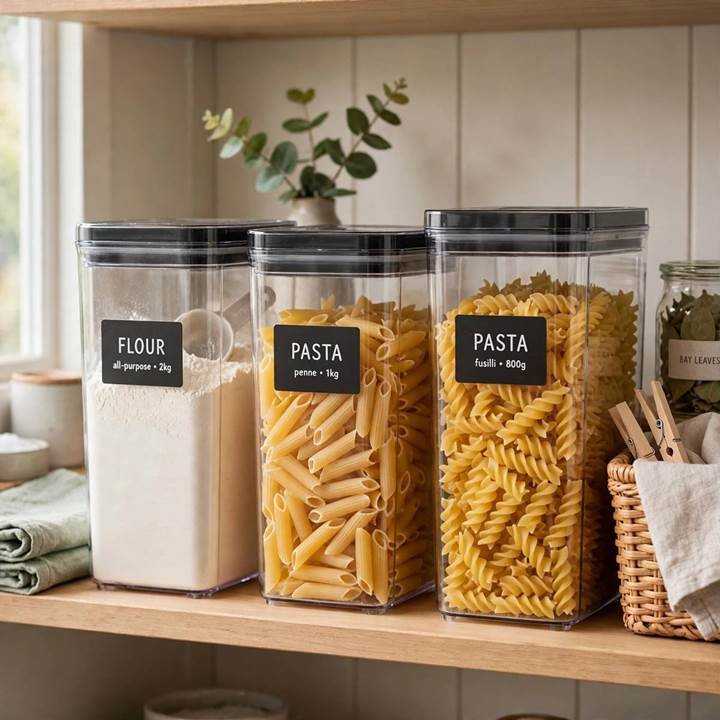
Visible food is food you actually use. Airtight pantry containers keep flour, rice, pasta, and snacks fresh while showing exactly what you have left. Choose square or rectangular shapes that stack neatly and fit your shelves without wasted gaps. Add simple labels with the contents and the purchase date, so everyone in the family knows where things belong. Rows of clear jars also bring a boutique grocery charm to an everyday pantry, which makes restocking oddly satisfying.
Over the Fridge and Narrow Gap Storage
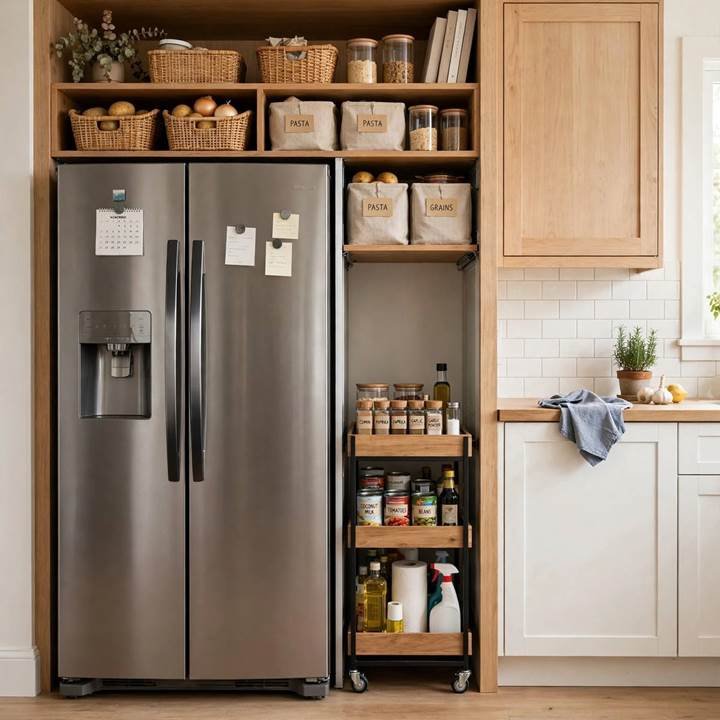
Small gaps add up to useful storage. A cabinet above the refrigerator holds rarely used platters and seasonal items, while a slim gap beside the fridge fits a rolling cart for oils, canned goods, and baking supplies. Wheel it out when you cook, then slide it back when you finish. Use baskets with handles for easy reach, and label them clearly. These overlooked spots can add several feet of storage without taking any floor space.
Hidden Toe Kick Drawers
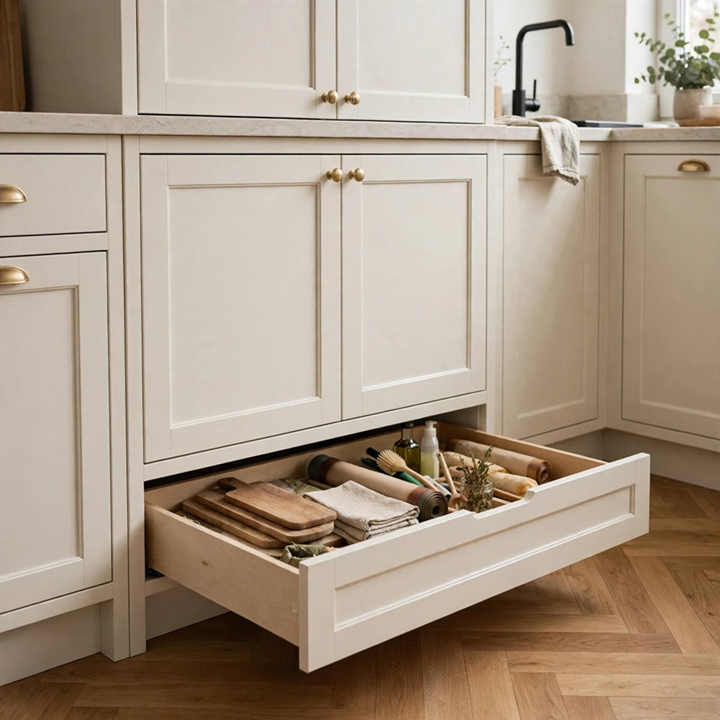
The space beneath your lower cabinets is wasted in most kitchens, yet it can hold a surprising amount. Toe kick drawers slide out from the base and store flat items like baking sheets, cutting boards, and serving trays. They also work for pet bowls or step stools that you want out of sight. Installation is easiest during a cabinet upgrade, though a skilled carpenter can retrofit them. Because they sit near the floor, use them for lightweight items only.
Kitchen Storage Ideas Comparison Table
| Item | Best For | Style/Room Type |
| Deep Drawers | Pots, pans, and bowls | Family, remodeled kitchens |
| Pull-Out Pantry | Narrow gaps and dry goods | Small, modern kitchens |
| Floor-to-Ceiling Cabinets | Maximum capacity | Apartments, custom kitchens |
| Corner Cabinet Solutions | Using dead corners | L-shaped, galley kitchens |
| Vertical Tray Dividers | Baking sheets and boards | Busy, bake-heavy kitchens |
| Open Shelving with Baskets | Display with hidden storage | Cottage, casual |
| Wall Rails and Magnetic Strips | Freeing drawers and counters | Small, rental kitchens |
| Appliance Garage | Clear countertops | Open-plan, modern |
| Island Storage | Everyday prep and tools | Large, open-plan kitchens |
| Under-Sink Organizers | Cleaning supplies | Apartments, family homes |
| Door-Mounted Racks | Wraps, foil, and snacks | Small kitchens |
| Clear Pantry Containers | Fresh food and visibility | Pantries, all styles |
| Narrow Gap Storage | Overlooked spaces | Tight, older kitchens |
| Toe-Kick Drawers | Flat items and hidden space | Custom, remodeled kitchens |
Frequently Asked Questions About Kitchen Storage Ideas
How do I get more storage in a small kitchen?
Use every vertical inch. Run cabinets to the ceiling, add wall rails for tools, and install shelf risers inside cabinets to double usable space. Door mounted racks and slim rolling carts turn overlooked gaps into storage. Declutter first and keep only what you use weekly on the counter. Choose deep drawers over lower shelves, since they use space more efficiently. Smart planning matters more than extra square footage in a compact kitchen.
What is the best way to store pots and pans?
Deep drawers with pegboard dividers are the best option because you can see and reach everything at once. Pull out shelves in lower cabinets work well too. Vertical organizers keep skillets and baking sheets upright, and a wall rail with hooks works in small spaces. Store heavy items low and nest lids in a rack or drawer. Keep your most used pan closest to the stove for easy access.
How can I add storage without remodeling?
Start with simple, low cost tools. Add shelf risers, lazy Susans, door mounted racks, and under sink organizers to your existing cabinets. A rolling cart in a narrow gap adds flexible capacity, while wall rails and magnetic strips move tools off the counter. Use clear containers to maximize pantry shelves. These upgrades take a weekend, require few tools, and work well for renters who cannot change cabinets or walls.
How do I organize kitchen cabinets for maximum space?
Empty each cabinet completely and sort items by how often you use them. Keep daily dishes and tools at eye level, heavy items low, and rarely used pieces high. Group similar items together near where you use them, such as pots by the stove. Add shelf risers and pull outs to use vertical space fully. Review cabinets twice a year and donate anything you no longer use.
What storage upgrades add the most value to a kitchen?
Deep drawers, pull out pantries, and ceiling height cabinets deliver the biggest daily payoff, and buyers tend to notice them. Hidden appliance garages and island storage also add polish and function. Lighting inside cabinets and drawers makes each upgrade feel more luxurious. If you are planning to sell, prioritize storage that looks clean and universal. Choose quality hardware, since smooth slides and soft close hinges signal a well built kitchen.
Why Trust This Guide
This guide comes from years of writing about home design, studying how American families use their kitchens, and reviewing which storage systems hold up in daily life. Each idea balances good looks with real practicality, because a storage solution only works when everyone in the household can use it easily. I pay close attention to materials, installation realities, and honest budgets so you can plan with confidence. The goal is simple: help you build a kitchen that feels organized, spacious, and genuinely enjoyable to cook in.
Cost and Time to Achieve These Kitchen Storage Ideas
Many storage upgrades suit confident DIYers. Wall rails and magnetic strips cost $20 to $100 and take an hour. Shelf risers, lazy Susans, and door racks run $15 to $80 each and need no tools. Pantry containers and labels cost $50 to $250 for a full set and take an afternoon. Open shelving costs $50 to $300 and fits into a weekend, while a rolling cart runs $100 to $500 with minimal assembly.
Larger upgrades usually need professionals. Pull out shelves and deep drawer conversions typically cost $150 to $500 per cabinet installed. A pull out pantry runs $400 to $1,500, and an appliance garage costs $500 to $2,500. Ceiling height cabinets typically cost $3,000 to $12,000 and take one to three weeks. Toe kick drawers add $200 to $600 each. Hiring a pro costs more, but it protects against crooked slides, weak mounting, and expensive rework.
Final Thoughts on Kitchen Storage Ideas
The best kitchen storage ideas fit the way you cook, shop, and live. Whether you add deep drawers, a slim pull-out pantry, or a simple wall rail, small upgrades create a kitchen that feels calmer and works faster. Pick two or three ideas that solve your biggest frustrations, then build from there. If this guide helped, save it to your Pinterest board so you can return whenever you are ready to start planning.