15 Kitchen Flooring Ideas for Style and Durability
Your kitchen floor takes spilled juice, dropped pans, muddy boots, and hours of standing. It also sets the visual foundation for everything above it. These kitchen flooring ideas balance good looks with durability, comfort, and easy cleaning for real American homes. Whether you love the warmth of wood or the cool polish of stone, you will find an option that fits. You will also find a comparison table, a cost breakdown, and answers to common questions.
What Is Shaping Kitchen Flooring Choices Across the US
Homeowners want floors that look natural but handle chaos without complaint. Wide plank wood looks, large format tile, and textured finishes are replacing glossy, high maintenance surfaces. Waterproof materials like luxury vinyl and porcelain have surged because they survive spills, pets, and kids. Warm, earthy tones are also replacing cold gray, so floors now feel softer and more inviting. Open floor plans encourage continuous flooring from kitchen to living room, which makes the whole space feel larger and calmer.
Wide Plank Hardwood for Timeless Warmth
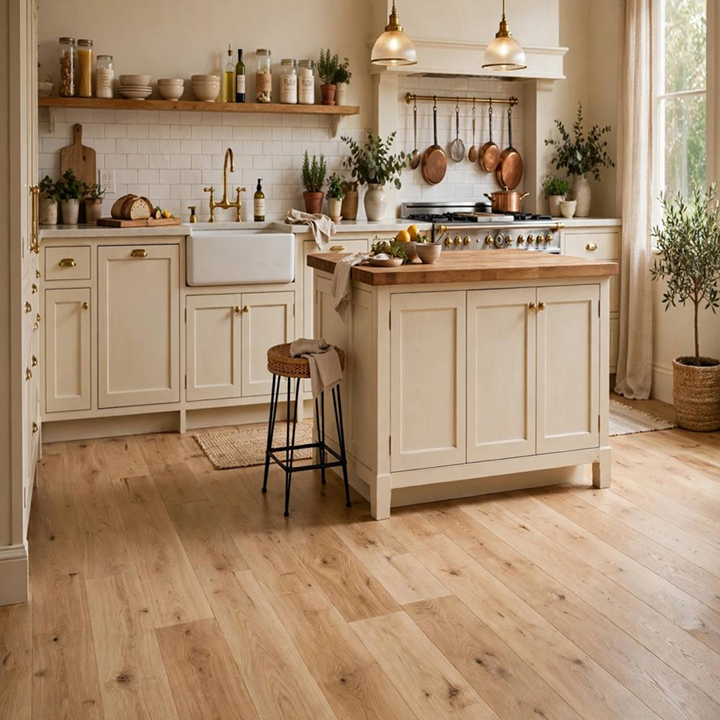
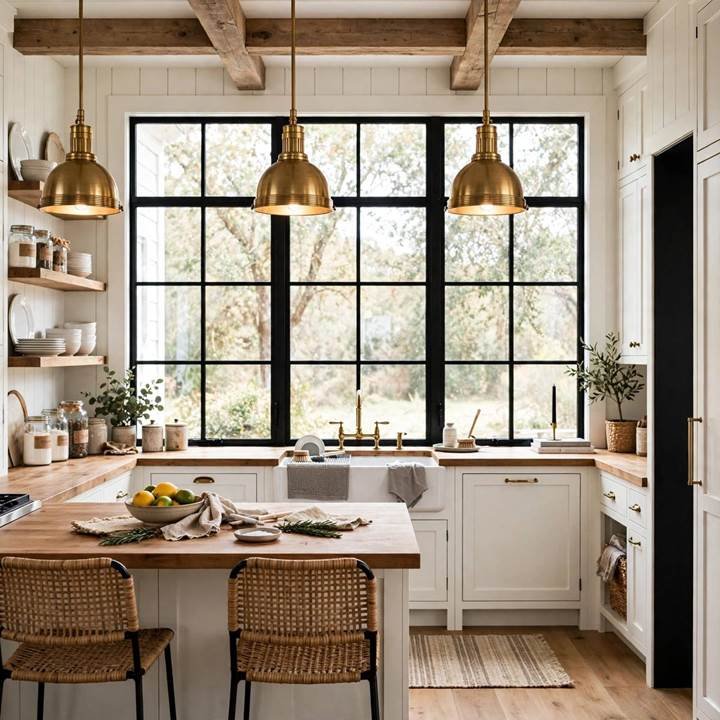
Hardwood brings a golden glow that makes a kitchen feel instantly welcoming. White oak, hickory, and maple show beautiful grain that deepens with age. Wide plank hardwood looks luxurious and continues seamlessly into adjoining rooms. Choose a matte or satin finish with a durable coating to resist scratches and moisture. Wipe spills quickly, and use felt pads under stools. If you love the warmth but worry about water, consider engineered hardwood, which handles humidity changes better than solid planks.
Luxury Vinyl Plank for Waterproof Wood Looks
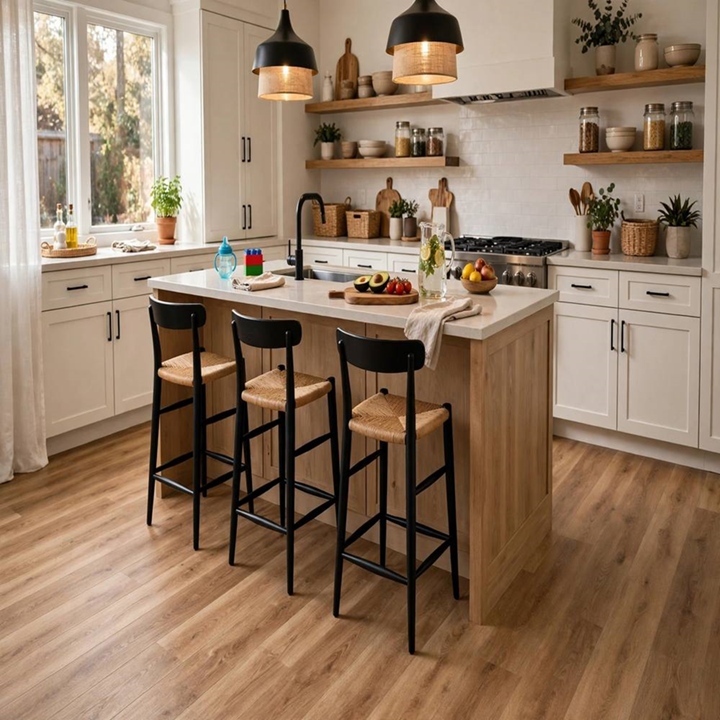
Luxury vinyl plank delivers the look of oak or walnut with far less worry. The surface resists water, scratches, and stains, so it suits busy family kitchens and homes with pets. Luxury vinyl plank also feels softer and quieter underfoot than tile or stone. Choose a thick wear layer, ideally 20 mil or more, for lasting durability. Click lock planks make installation friendly for DIYers, and realistic textures make it hard to tell the difference from real wood.
Large Format Porcelain Tile
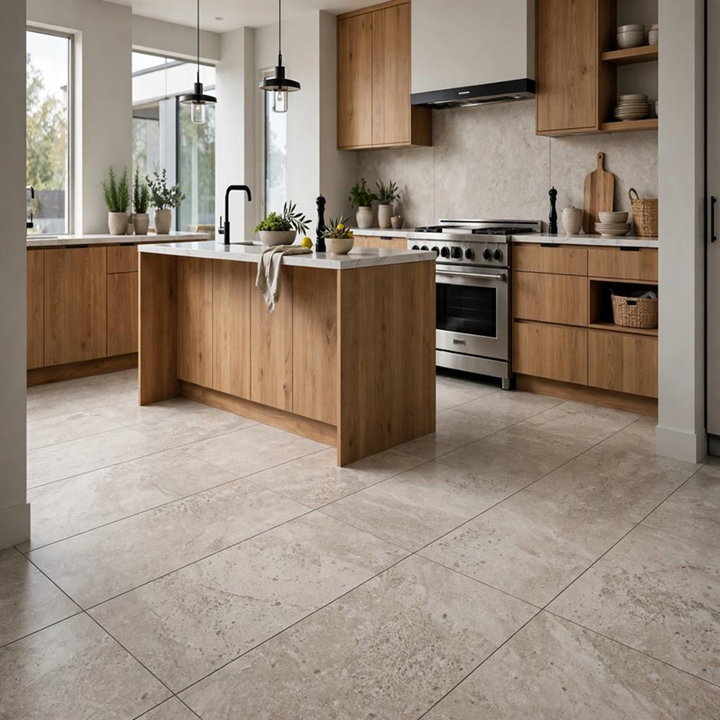
Large tiles create fewer grout lines, which makes a floor easier to clean and the room feel bigger. Porcelain is dense, stain resistant, and nearly waterproof. Large format porcelain tile in stone look, concrete look, or wood look finishes suits modern and transitional kitchens. Choose a matte or textured surface for better traction. Use a flat, well prepared subfloor, since big tiles show uneven surfaces. Porcelain feels cool underfoot, so consider radiant heat if you love going barefoot.
Black and White Checkerboard Tile
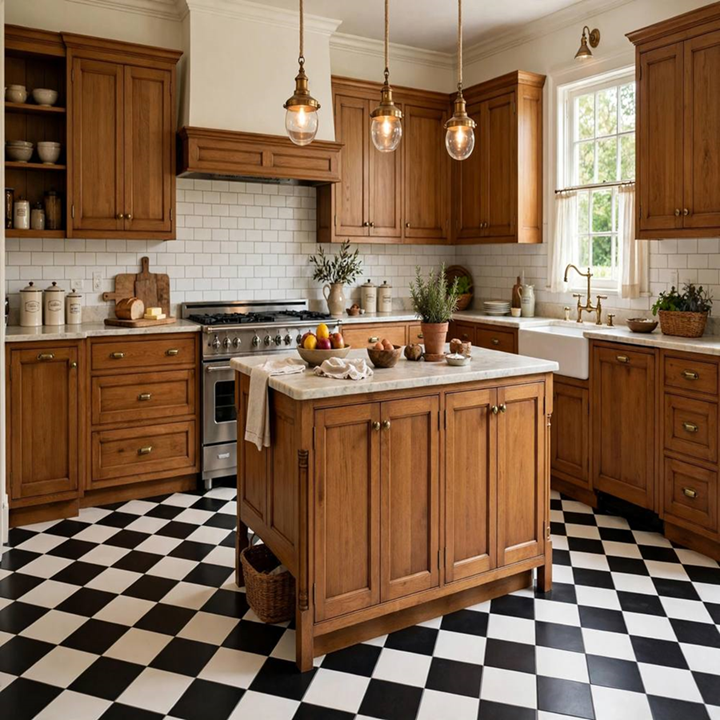
A checkerboard floor adds graphic charm that never fully goes out of style. The crisp pattern brings energy to a plain kitchen and pairs beautifully with wood cabinets, brass fixtures, and soft white walls. A checkerboard tile floor looks classic in black and white, or softer in cream and sage. Set the squares on a diagonal for added movement. Choose porcelain or marble look ceramic for durability, and use a matching grout color to keep the pattern bold.
To read more ideas click here.
Herringbone Wood or Tile Pattern

Herringbone adds rhythm and craftsmanship to a floor. The zigzag pattern feels elegant in both wood and tile, and it draws the eye across the room. A herringbone floor works especially well in kitchens with simple cabinets, where the floor becomes the focal point. Choose narrower planks for a classic European feel. Installation takes extra time and skill, so expect higher labor costs. The result looks custom and richly layered, especially in natural light.
Natural Stone and Slate Tile
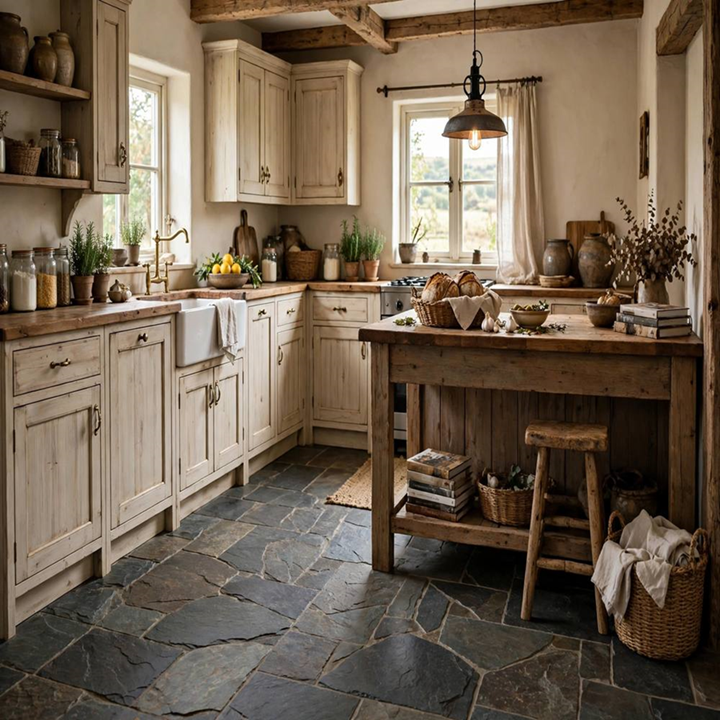
Stone brings earthy texture and one of a kind character. Slate, travertine, and limestone each offer soft color variation that no factory can copy. Natural stone flooring feels rustic and refined, especially in farmhouse and Mediterranean kitchens. Seal it regularly to protect against stains and moisture. Textured finishes provide better grip than polished ones. Stone feels cold in winter, so radiant heating or a warm runner rug adds comfort underfoot where you stand and cook.
Polished Concrete for a Modern Edge
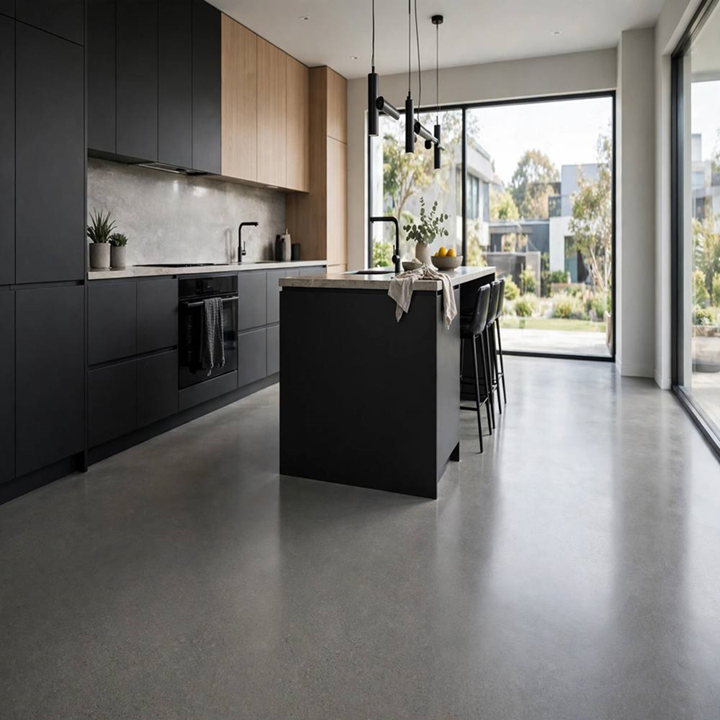
Concrete offers a sleek, seamless surface that suits modern and industrial kitchens. It is durable, easy to clean, and available in tones from soft gray to warm sand. Polished concrete flooring can include subtle sheen or a matte sealed finish. Seal it properly to prevent stains, and add rugs for comfort. Concrete is hard on dropped dishes and tired feet, so use cushioned mats near the sink and stove. A pro installation gives the smoothest, most even result.
Cork Flooring for Comfort Underfoot

Cork feels soft and springy, which makes long cooking sessions easier on your back and knees. It also absorbs sound, resists mold, and brings a warm, natural look. Cork flooring is a sustainable choice, harvested from bark without cutting the tree. Choose a sealed, high quality product to resist moisture. Cork can dent under heavy furniture, so use felt pads. Its subtle, organic pattern suits Scandinavian, modern organic, and cottage kitchens beautifully.
Terracotta Tile for Mediterranean Charm
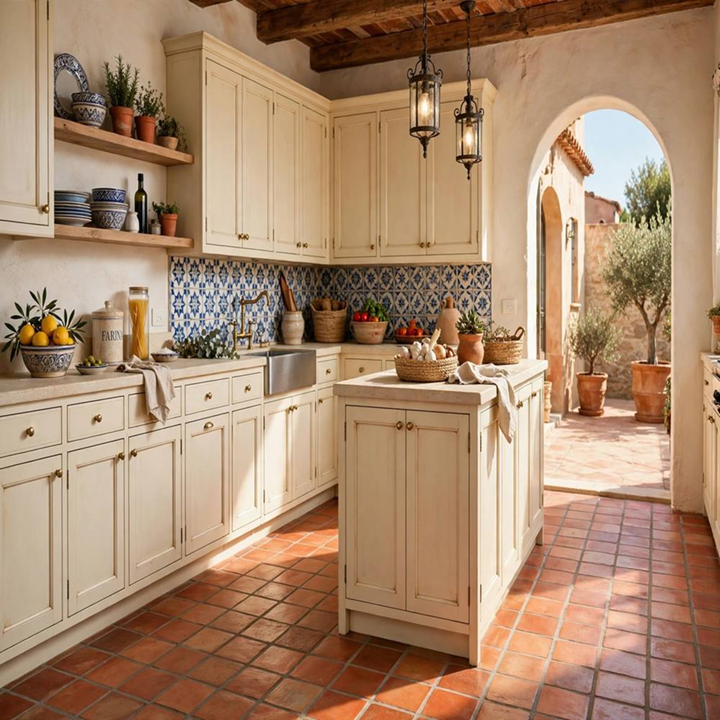
Terracotta brings sun baked warmth and rustic character to the kitchen. Its rich orange and clay tones glow beautifully under warm lighting. Terracotta tile flooring pairs well with cream cabinets, wooden beams, and handmade backsplash tile. Seal it to prevent stains and wipe spills quickly. The surface wears gracefully, developing patina over time. This floor suits Spanish, Mediterranean, and farmhouse kitchens, especially in sunny homes that welcome earthy, lived in style.
Marble Look Porcelain for Luxe Elegance
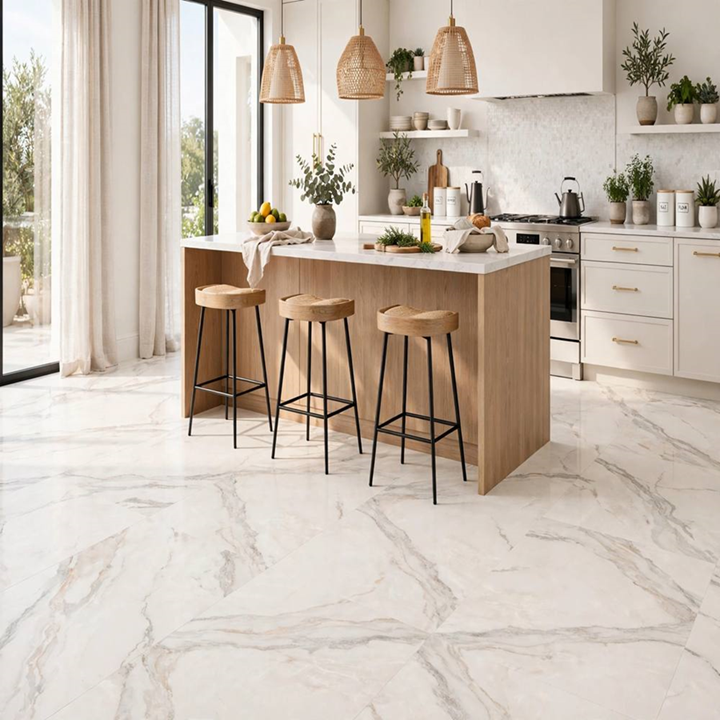
Real marble stains and etches, but marble look porcelain gives you the elegance without the stress. Soft veining in white, gray, or warm cream adds movement to the floor. A marble look porcelain floor brightens a kitchen and reflects light beautifully. Choose a honed finish for better traction and fewer visible scuffs. Pair it with white cabinets, brass hardware, and warm wood stools for a refined, timeless look that still handles family life.
Cement and Patterned Encaustic Tile

Patterned tile gives a kitchen personality from the ground up. Geometric designs, floral motifs, and bold color combinations create an artful, European inspired look. Patterned cement tile works best when the cabinets and counters stay simple, so the floor can shine. Seal it carefully, since the porous surface can absorb oil. Porcelain versions offer the same pattern with easier maintenance. Use a small patterned area, like a runner of tile, for a subtler effect.
Engineered Wood for Stability
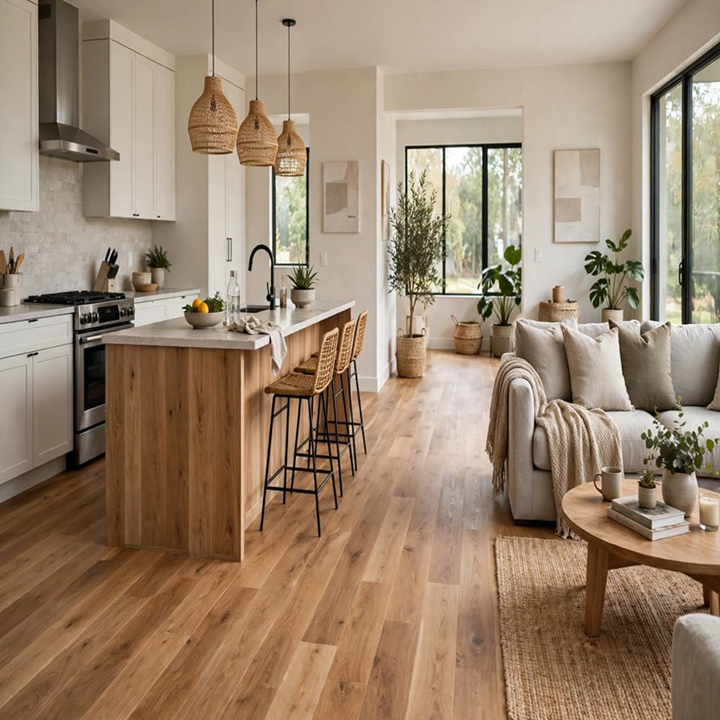
Engineered wood has a real hardwood surface over a stable plywood core. That structure handles humidity swings better than solid planks, which suits kitchens. Engineered wood flooring offers the same natural beauty with improved durability and often easier installation. Choose a thick top layer so you can sand and refinish it later. Wipe spills quickly and avoid steam mops. It works well over radiant heat, which makes it a smart pick for cooler climates.
Rubber and Cushioned Vinyl for Comfort

Cushioned surfaces are a practical choice for anyone who cooks for hours. Rubber and sheet vinyl feel soft, resist water, and absorb noise. Cushioned vinyl flooring now comes in realistic stone and wood patterns that look surprisingly upscale. It is also budget friendly and easy to maintain. Choose a thick, high quality product and ensure the seams are sealed. It suits family homes, rentals, and kitchens where comfort and cost both matter.
Mixed Flooring and Inlaid Borders
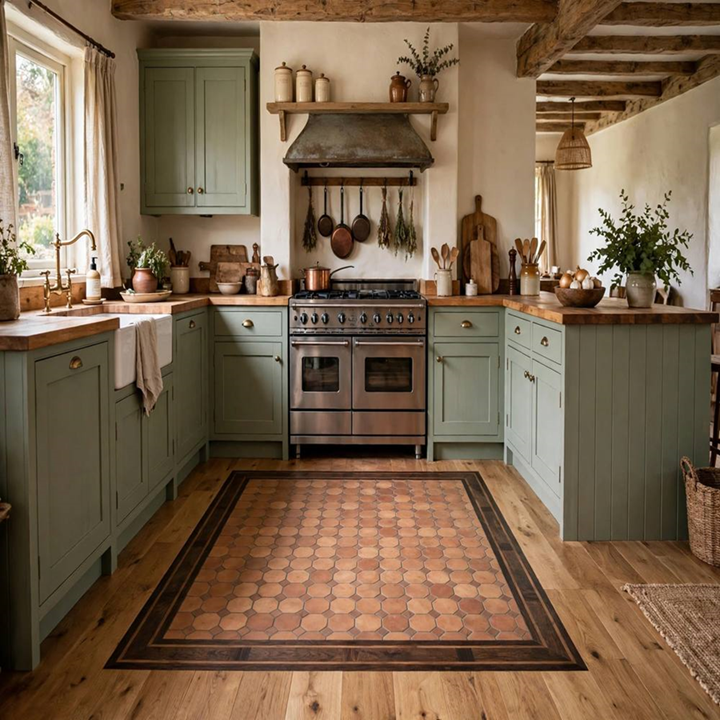
A border or inlay adds a custom touch that elevates a simple floor. Frame a field of oak planks with a darker band, or set a patterned tile inset in front of the range. A floor border inlay defines the cooking zone and adds charm without covering the entire room. Keep the pattern limited to one area so the effect stays refined. This approach works well in traditional, cottage, and transitional kitchens.
Kitchen Flooring Ideas Comparison Table
| Item | Best For | Style/Room Type |
| Wide-Plank Hardwood | Timeless warmth | Traditional, modern organic |
| Luxury Vinyl Plank | Waterproof wood looks | Family kitchens, rentals |
| Large-Format Porcelain Tile | Easy cleaning, fewer grout lines | Modern, transitional |
| Checkerboard Tile | Graphic charm | Retro, cottage, classic |
| Herringbone Pattern | A custom focal floor | Traditional, French-inspired |
| Natural Stone and Slate | Earthy character | Farmhouse, Mediterranean |
| Polished Concrete | Sleek, seamless style | Modern, industrial |
| Cork Flooring | Comfort and quiet | Scandinavian, eco-friendly |
| Terracotta Tile | Sun-baked warmth | Mediterranean, rustic |
| Marble-Look Porcelain | Luxe elegance, low upkeep | Contemporary, classic |
| Patterned Cement Tile | Bold personality | Eclectic, bohemian |
| Engineered Wood | Stability with real wood beauty | Open-plan, transitional |
| Cushioned Vinyl | Comfort and budget | Family homes, rentals |
| Mixed Floor Inlays | A custom accent | Cottage, traditional |
Frequently Asked Questions About Kitchen Flooring Ideas
What is the best flooring for a kitchen?
Porcelain tile and luxury vinyl plank are the top choices because they resist water, scratches, and stains. Engineered hardwood offers real wood beauty with better stability than solid planks. The best option depends on your budget, cooking habits, and comfort preferences. Families with kids and pets often prefer waterproof vinyl or porcelain, while design focused homeowners may choose herringbone wood or stone. Order samples and test them in your own lighting before deciding.
What is the most durable kitchen flooring?
Porcelain tile is widely considered the most durable option because it resists scratches, moisture, and heavy use. Luxury vinyl plank with a thick wear layer is also very tough and more forgiving underfoot. Natural stone lasts for decades when sealed properly. Hardwood can handle years of use but may scratch or dent. Consider your household’s activity level and choose a finish with texture, since textured surfaces hide wear better than glossy ones.
Is hardwood flooring a good idea in a kitchen?
Yes, if you take care of it. Hardwood adds warmth and value, and it flows beautifully into open plan homes. Choose engineered wood or a durable finish to handle humidity and spills. Wipe up liquids quickly, use mats near the sink, and avoid steam cleaners. Hardwood can scratch and show water damage over time, so it may not suit very wet or high traffic households. Many homeowners find the beauty worth the care.
What kitchen flooring is easiest to clean?
Large format porcelain tile, sealed luxury vinyl, and sheet vinyl are the easiest to clean. They resist stains, handle mopping, and have few crevices for crumbs. Fewer grout lines make cleaning faster, so choose large tiles with narrow joints. Sweep or vacuum daily, and mop with a gentle, manufacturer-approved cleaner. Avoid abrasive pads, which can dull the surface. A quality sealer on stone or grout also helps keep stains from setting.
What flooring is best for a kitchen with kids and pets?
Luxury vinyl plank and porcelain tile are top picks because they resist scratches, spills, and moisture. Both clean easily and hold up to claws, toys, and dropped dishes. Choose textured surfaces for better traction and to hide minor wear. Cushioned vinyl and cork add comfort for little ones who play on the floor. Place washable rugs near the sink and stove, and wipe spills quickly to keep the surface fresh.
Why Trust This Guide
This guide comes from years of writing about home design, studying US kitchen trends, and reviewing how flooring materials perform in real family homes. Each idea balances beauty with practicality, because a kitchen floor must handle spills, foot traffic, and constant cleaning. I pay close attention to durability, comfort, installation realities, and honest budgets so you can plan with confidence. The goal is simple: help you choose a floor that looks wonderful, lasts for years, and suits the way you actually live.
Cost and Time to Achieve These Kitchen Flooring Ideas
Some flooring projects suit confident DIYers. Luxury vinyl plank costs $2 to $7 per square foot in materials, so a 200 square foot kitchen runs $400 to $1,400 and takes one to two days. Cushioned sheet vinyl costs $1 to $4 per square foot. Click-lock cork or floating engineered wood costs $3 to $9 per square foot and takes a weekend. Rugs, mats, and runners cost $50 to $300 and need no installation.
Premium floors usually need professionals. Porcelain tile costs $8 to $20 per square foot installed, while natural stone runs $12 to $30. Solid hardwood costs $10 to $25 per square foot installed, and herringbone patterns can add 25 to 50 percent in labor. Polished concrete costs $4 to $15 per square foot, and patterned cement tile runs $15 to $40. Most professional installs take three to seven days, and demolition or subfloor repair adds extra cost.
Final Thoughts on Kitchen Flooring Ideas
The best kitchen flooring ideas combine beauty, comfort, and everyday toughness. Whether you choose warm oak planks, a playful checkerboard, or waterproof vinyl that shrugs off spills, the right floor makes the whole room feel grounded. Pick two or three favorites, order samples, and compare them in your own light. If this guide inspired you, save it to your Pinterest board so you can return whenever you are ready to start planning.