15 Shared Bedroom Ideas, Smart Layouts for Two or More
Shared bedroom ideas can turn a crowded room into a calm, organized space where everyone feels at home. Whether siblings split into a small bedroom or roommates share a rental, smart layouts give each person privacy, storage, and style. This guide gathers 15 looks that work in real American homes, from compact apartments to busy family houses. You’ll find layout, color, and storage advice, plus a quick comparison table, honest cost breakdowns, and answers to common questions. Every idea is practical, so you can start small or redo the whole room.
Why Shared Bedrooms Are Getting Smarter in US Homes
Rising housing costs and growing families have made shared rooms more common across the United States, and design has kept pace. Among current shared bedroom ideas, flexible furniture, built-in storage, and personalized zones lead the way. Soft, earthy colors replace loud themes, while loft beds and curtain dividers make every square foot work harder. People now want shared rooms that feel calm and fair, where each person has a spot that is truly theirs.
1. Classic Bunk Beds
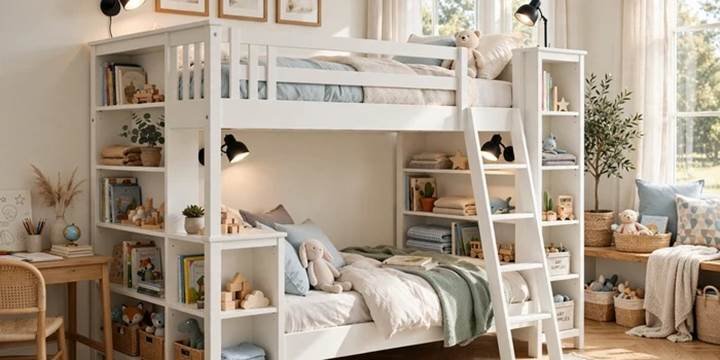
Bunk beds are the ultimate space saver. Stacking two sleeping spots frees up floor area for play, study, or a small dresser. Choose a bunk bed with sturdy guardrails, a wide ladder, and built in shelves for books and water bottles. Paint or stain the frame in a calm shade like warm white or soft gray so it blends with the walls. Add reading lights and privacy curtains for a cozy, cave like feel.
2. Loft Beds with Desk Below
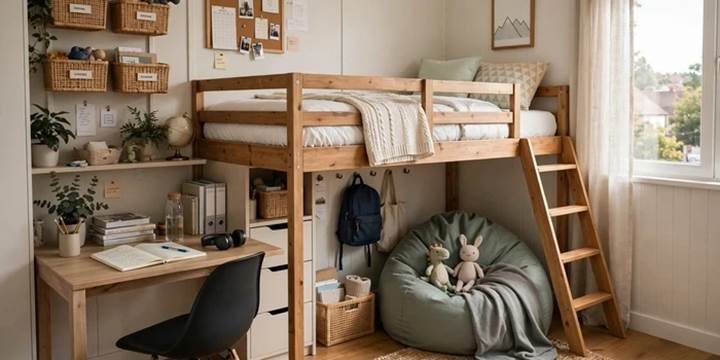
A loft bed lifts sleeping space overhead and creates a full workspace underneath. Slide a desk, a bean bag, or a small sofa into the empty area beneath. A loft bed with desk suits tweens, teens, and college roommates who need study zones in tight rooms. Add a clip-on lamp, a pinboard, and a soft rug below. The setup keeps homework, sleep, and relaxation neatly separated, even in a very small footprint.
3. Twin Beds in a Symmetrical Layout
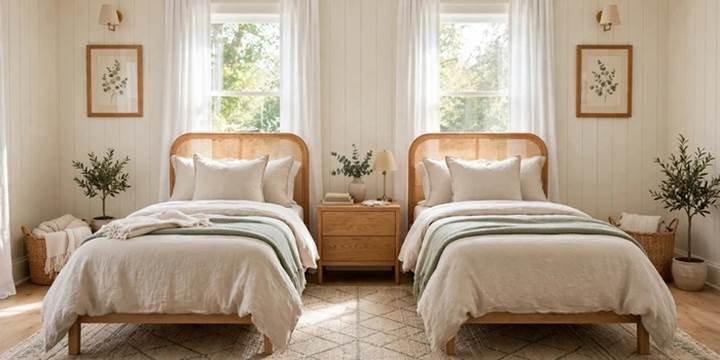
Two matching twin beds create instant harmony. Place them on opposite walls with a shared nightstand between them, or line them up side by side under a window. A symmetrical twin bed layout feels balanced and fair, which helps siblings who share space. Choose coordinating bedding with small personal touches, like different pillow colors. Add a wide rug between the beds to define the walkway and soften the room.
4. Curtain Room Dividers
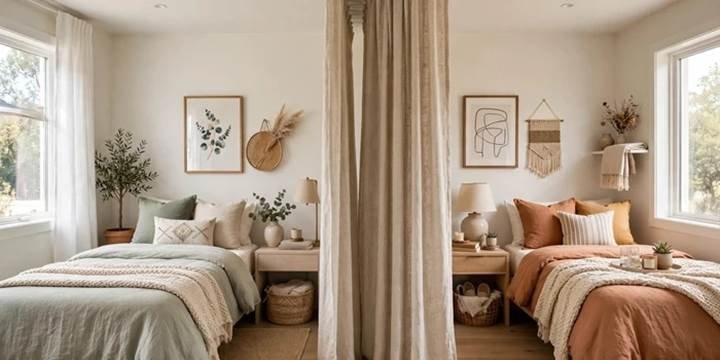
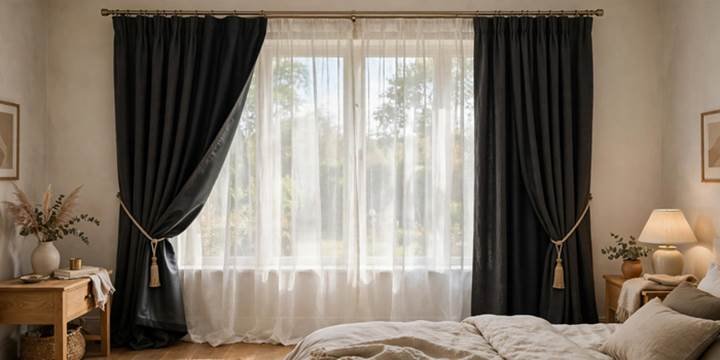
Privacy matters, even in a shared room. Hang a ceiling mounted track with a heavy linen or blackout curtain between the beds. A room divider curtain gives each person a private zone and blocks light from late reading. It slides open when you want more space and closes when you need quiet. Choose a soft, textured fabric in a neutral shade, and the divider adds warmth instead of feeling like a wall.
5. Built In Storage Beds
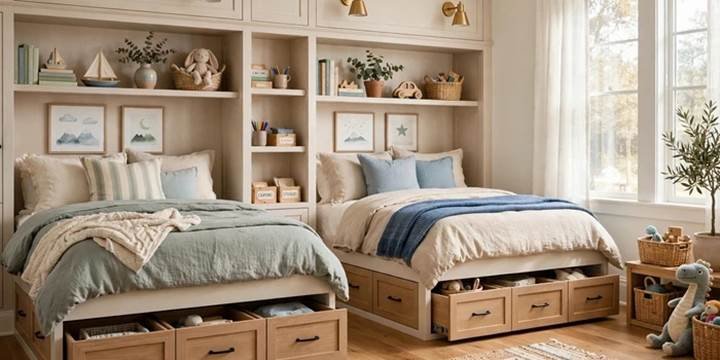
Storage is the biggest challenge in a shared bedroom. Beds with deep drawers underneath hold blankets, off season clothes, and toys without adding another dresser. Under bed storage keeps floors clear and makes cleanup faster for kids. Look for smooth gliding drawers and solid wood or laminate finishes that resist scuffs. Label each drawer with a name or color so everyone knows where their things belong. The result feels tidy, organized, and calm.
6. Personal Zones with Color Coding
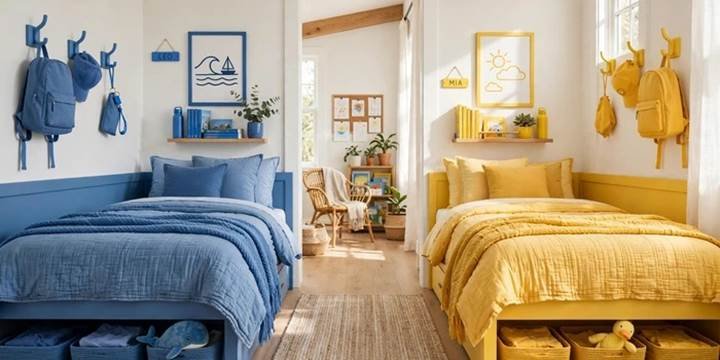
Color coding gives each person a place to call their own. Assign each roommate or sibling a color for bedding, hooks, baskets, and wall art. Color coded zones prevent mix ups and add personality without making the room feel chaotic. Keep the walls a soft neutral and let the accent colors do the talking. Try sage and dusty blue, or terracotta and cream. The idea works especially well for kids, who love having a space that clearly belongs to them.
7. Wall to Wall Shelving and Built Ins
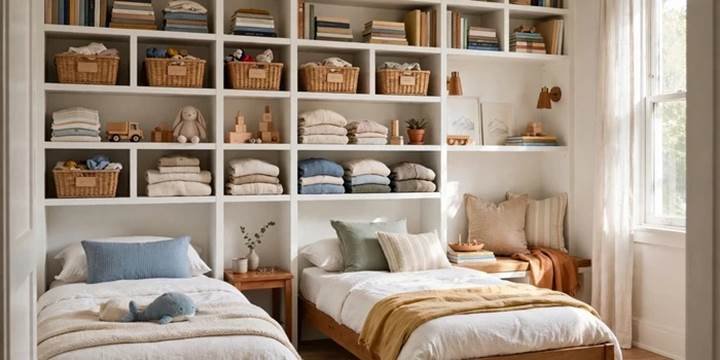
Vertical space is your best friend in a small shared room. Floor to ceiling shelves, cubbies, and built in wardrobes keep belongings off the floor and out of the way. Built in shelving can wrap around a window or fill the wall behind the beds. Paint it the same color as the walls so it blends in and looks custom. Add baskets for small items and a few open shelves for books and keepsakes.
8. Shared Bedroom for Siblings of Different Ages
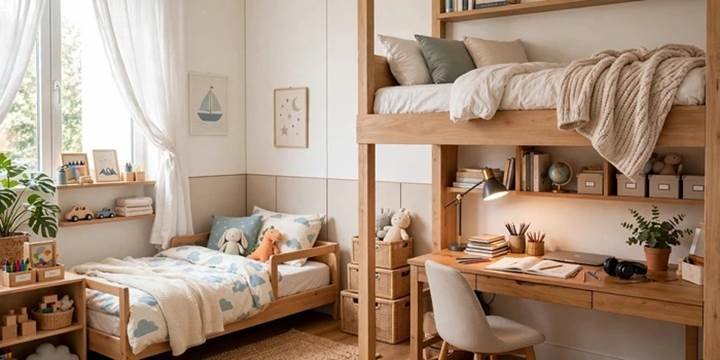
Kids at different ages need different things. Give the older child a loft or desk zone, and the younger one a low bed with easy access to toys. A sibling shared bedroom grows best with flexible furniture like adjustable shelves and modular storage. Use neutral walls and change accessories as kids grow. Add a reading corner with a shared beanbag, and the room feels friendly for both, with room to adapt over the years.
9. Shared Bedroom for Teens
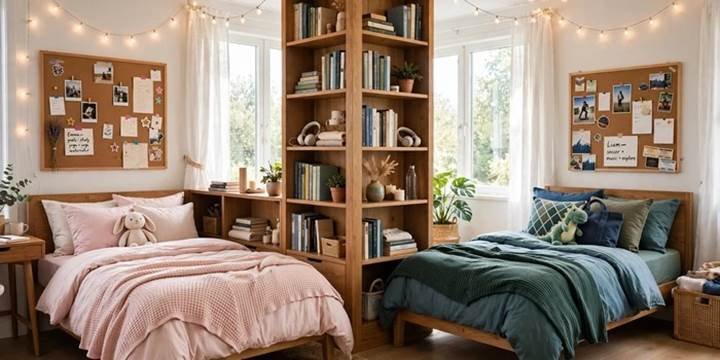
Teens crave privacy and self expression. Give each one a bed, a desk, and a wall to decorate. A teen shared bedroom works well with headboard bookcases, pinboards, and string lights that create personal glow zones. Use a soft, neutral base and let posters and photos add color. Noise reducing rugs, headphones, and curtain dividers help keep peace. The room feels like two small retreats in one shared space.
10. Shared Room for Couples
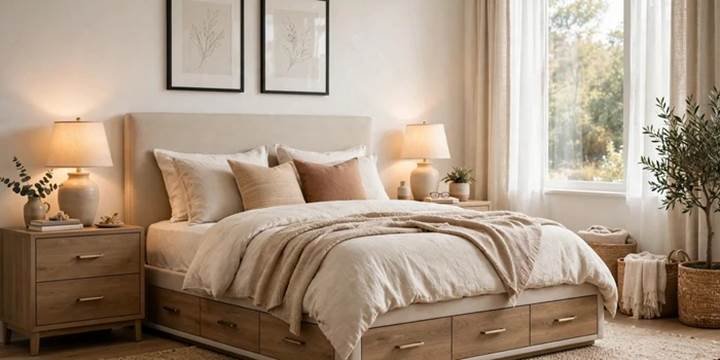
A couple sharing a small bedroom, such as in a studio or tiny home, needs smart layout and gentle style. Choose a bed with storage, matching nightstands, and a wall mounted shelf for extra space. A couples shared bedroom benefits from soft lighting, layered textiles, and a small desk or vanity. Keep colors calm and combine both people’s tastes with a neutral base and a few personal accents in art or bedding.
11. Boys and Girls Shared Bedroom
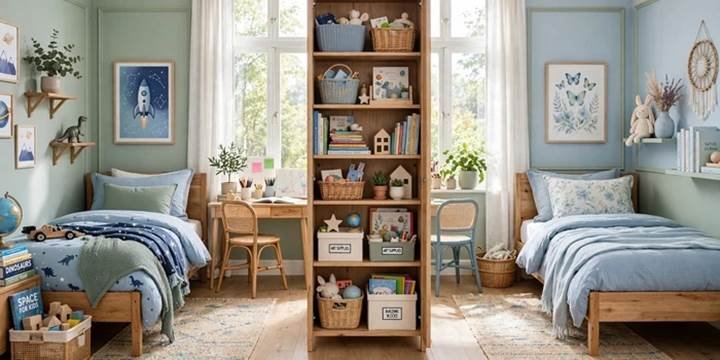
Design a room that feels balanced for kids of different genders. Use a gender neutral palette like sage, soft blue, mustard, or warm white, and add personal touches through bedding and art. A boys and girls shared bedroom works best with clear zones, separate storage, and a curtain or bookcase divider. Keep decor playful but not themed. That way the room stays fresh as tastes change, and neither child feels left out.
12. Murphy Beds and Wall Beds
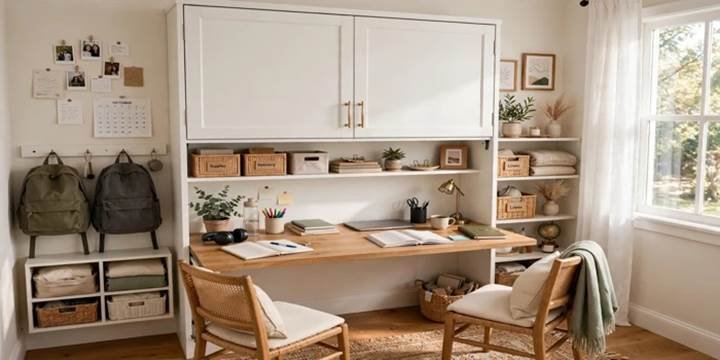
A Murphy bed folds into the wall and gives you a spacious room during the day. It works well in guest rooms, home offices, and small shared bedrooms that double as play or workspaces. A Murphy bed frees up floor space for a desk, a sofa, or a play area. Modern designs include built in shelves and lighting. Choose a quality mechanism and have it installed properly for safety and smooth daily use.
13. Sleek Trundle Bed Setup
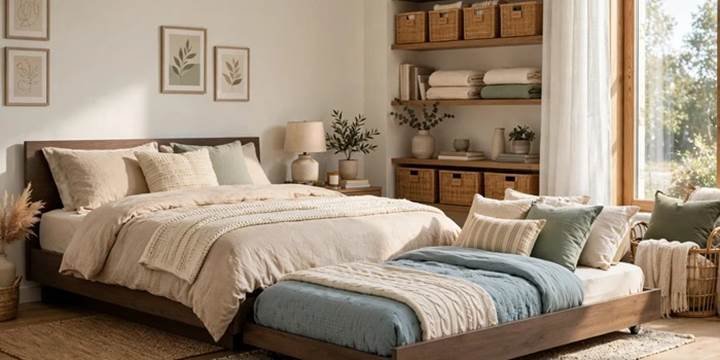
A trundle bed tucks a second mattress beneath the main bed and pulls out at night. It is a clever fit for sleepovers, growing families, and rooms that need flexible sleeping. A trundle bed keeps the floor open during the day and gives siblings or guests their own sleeping spot. Choose a sturdy frame with smooth wheels and add coordinating bedding. Store spare blankets and pillows nearby for quick nighttime setup.
14. Shared Bedroom Lighting and Privacy
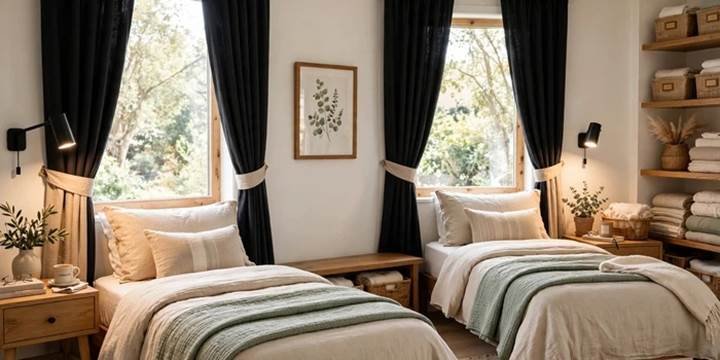
Lighting keeps a shared room peaceful. Give each bed its own reading light, and add dimmable overhead lighting for shared moments. Bedside reading lights let one person read while the other sleeps. Blackout curtains, a white noise machine, and a soft rug muffle sound and light. Warm bulbs around 2700 Kelvin create a gentle glow that supports rest. Small touches like these make a shared room feel private and comfortable.
15. Small Shared Bedroom Layout Tricks
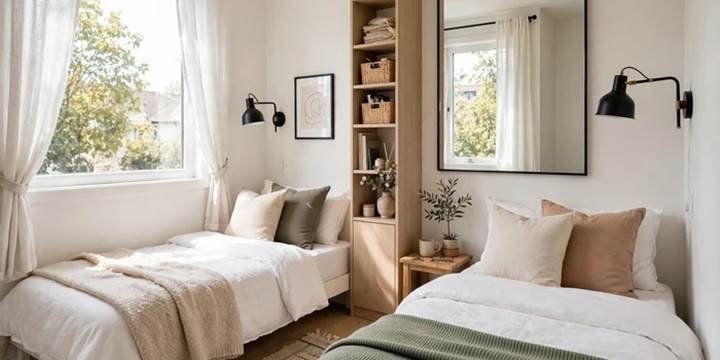
Small rooms need clever planning. Place beds along the walls, use vertical storage, and keep the center clear. Small shared bedroom ideas include a mirror opposite the window, wall mounted lamps, and light, low contrast paint to open up the space. Choose furniture that does double duty, such as storage benches and desks that fold away. The room feels bigger, calmer, and easier to keep tidy, even with two or more occupants.
Shared Bedroom Ideas at a Glance
| Item | Best For | Style/Room Type |
| Classic Bunk Beds | Maximum floor space | Kids’ rooms, small bedrooms |
| Loft Beds with Desk | Study and sleep zones | Teens, dorms, tight spaces |
| Symmetrical Twin Beds | Balanced, fair layouts | Siblings, guest rooms |
| Curtain Room Dividers | Instant privacy | Teens, roommates, flexible rooms |
| Built-In Storage Beds | Hidden storage | Small bedrooms, family homes |
| Color-Coded Zones | Personal identity | Kids, siblings, roommates |
| Wall-to-Wall Shelving | Vertical storage | Small or narrow rooms |
| Sibling Different Ages | Growing flexibility | Family homes, nurseries to teens |
| Teen Shared Room | Privacy and self expression | Teens, tweens |
| Couples Shared Room | Calm, tidy layout | Studios, small apartments |
| Boys and Girls Room | Neutral, balanced style | Siblings, mixed-gender rooms |
| Murphy Beds | Flexible, multipurpose space | Guest rooms, home offices |
| Trundle Bed | Sleepovers and guests | Kids’ rooms, guest rooms |
| Lighting and Privacy | Peaceful, restful nights | Any shared room |
| Small Room Layout Tricks | Making space feel larger | Apartments, compact rooms |
Shared Bedroom Ideas FAQs
How do you decorate a shared bedroom?
Start with a calm, neutral base and add personal touches for each person. Use matching bedding in different accent colors, give each person their own shelf or wall space, and choose furniture with built in storage. Add a rug to define the walkway and lighting for each bed. Keep the layout simple, and let each person decorate their own zone with art, photos, and small keepsakes.
How do you divide a shared bedroom?
Use a ceiling mounted curtain track, a tall bookcase, or a folding screen to divide the room. Each option creates a private zone without building a wall. Curtains are cheap, flexible, and easy to move. Bookcases add storage while separating the space. Place the divider between beds or desks, and choose soft, neutral fabrics that add warmth. Add separate lamps so each side feels like its own room.
How do you share a small bedroom with a sibling?
Choose space saving furniture like bunk beds, loft beds, or storage beds. Use vertical shelving, wall hooks, and under bed drawers to keep floors clear. Give each child a personal zone with color coded bedding and a small display area. Set simple rules, such as toys going back into labeled bins each night. A tidy layout and clear boundaries keep the room peaceful.
What is the best layout for a shared bedroom?
The best layout depends on room size. In a square room, place beds on opposite walls with a nightstand in between. In a long, narrow room, line the beds along the long walls or use bunk beds to save floor space. Leave a clear walkway at least three feet wide. Keep storage near each bed, and place desks by windows for natural light.
How can I give each person privacy in a shared bedroom?
Use curtains, folding screens, or bookcases to create visual separation. Give each person a personal lamp, a lockable drawer or box, and a wall for their own decor. Blackout curtains and white-noise machines help with sleep differences. Agree on quiet hours and private time in the room. Small boundaries and clear zones help everyone feel respected and comfortable in the shared space.
Why Trust This Guide
This guide comes from hands on experience with home decor projects, plus careful research into current design trends and space planning methods. Every one of these shared bedroom ideas was chosen because it works in real rooms with real budgets, not just in styled photos. Costs reflect typical US pricing for furniture, materials, and labor, and the tips draw on common mistakes families and roommates make. The goal is simple: help you build a shared space that feels calm, fair, and personal.
Cost and Time to Achieve Your Shared Bedroom Look
DIY Costs and Timeline
Doing it yourself is the budget route. Bunk beds run $300 to $900, while loft beds cost $250 to $800. A ceiling mounted curtain divider costs $60 to $200, and storage bins, shelves, and lighting add $100 to $400. Fresh paint costs $80 to $200. Plan a weekend for assembly and styling, or three to five days if you add shelving and a full room refresh.
Professional Costs and Timeline
Hiring pros adds polish for built ins and custom features. Carpenters typically charge $50 to $100 per hour, so built in shelving often costs $1,000 to $4,000 installed. A Murphy bed runs $1,500 to $5,000 with installation. Painters charge $350 to $900 for a standard bedroom, and assembly services cost $75 to $200 per piece. Most projects take one to five days, depending on scope.
Conclusion
The right shared bedroom ideas can turn a tight, cluttered room into a calm space that works for everyone who sleeps there. Whether you love bunk beds, loft desks, or a clever curtain divider, there’s a layout here that fits your household, budget, and skill level. Start with one small change, live with it for a few days, and adjust as needs grow. If this list sparked inspiration, save it to your favorite Pinterest board so you can find it when you’re ready to begin.