15 Kitchen Organization Ideas for a Clutter Free Home
A well organized kitchen feels different the moment you walk in. Counters stay clear, spices sit within reach, and the pan you need slides out without a clatter. These kitchen organization ideas focus on simple systems that work in real American homes, from tiny apartments to busy family kitchens. Each tip solves a specific daily frustration. You will also find a comparison table, a realistic cost breakdown, and answers to the questions people ask most.
Why Organized Kitchens Are Becoming a Top Priority in the US
Homeowners now cook, work, and entertain in the same space, so clutter shows up faster and bothers people more. Open floor plans put every messy counter on display, which pushes many families toward hidden storage and tidy systems. Rising grocery prices also encourage smarter pantry habits, since visible shelves reduce food waste. Instead of buying more gadgets, people are choosing deep drawers, pull-outs, and clear containers that keep daily routines simple. The trend is calm, practical, and built around how people really live.
Drawer Dividers for Utensils and Tools
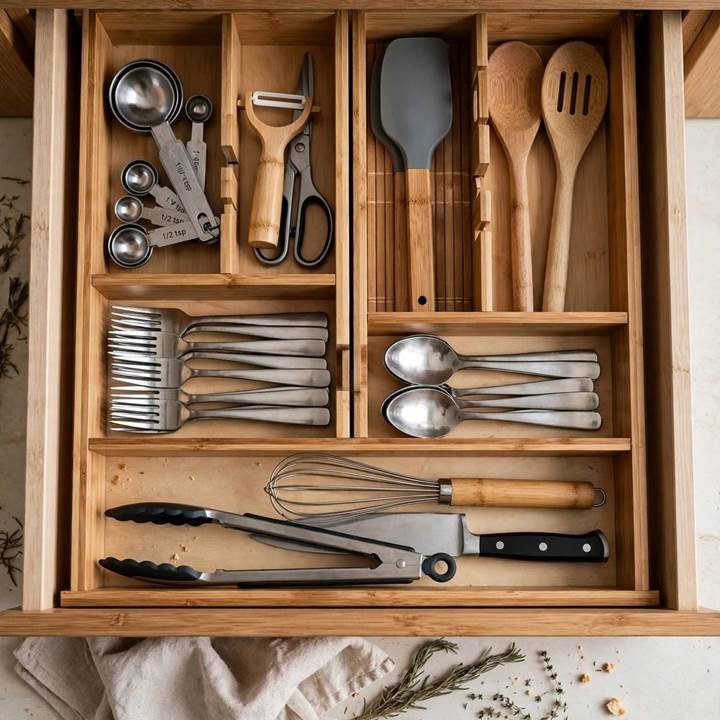
A jumbled utensil drawer slows every meal. Dividers give each tool a home, so spatulas, whisks, and peelers never tangle. Drawer dividers in bamboo or adjustable wood fit most drawer sizes and look pretty when you open them. Group tools by task, such as baking in one section and serving in another. Keep only what you use weekly in the top drawer, and move rarely used gadgets to a lower shelf or a separate bin.
Pull Out Shelves for Deep Lower Cabinets
Deep lower cabinets swallow pots and pans, leaving the back of the shelf out of sight and out of mind. Pull out shelves slide the entire contents toward you, so nothing hides in the shadows. Install them on rails inside existing cabinets, and your back stops hurting from kneeling and reaching. Choose full extension, soft close glides for a quiet, smooth motion. Store heavy cookware low and lighter items on upper levels so everything stays easy to grab.
Vertical Pan and Lid Organizers

Stacked pans scrape each other, and loose lids always seem to vanish. A vertical pan organizer stores skillets and baking sheets on their sides like files in a drawer, so you can pull out the one you need without lifting the whole stack. Add a narrow lid rack to the cabinet door or inside a drawer. This setup protects nonstick coatings and frees up valuable shelf space. It works especially well in small kitchens with limited cabinet depth.
To read more stunning ideas click here.
Lazy Susans for Corner Cabinets

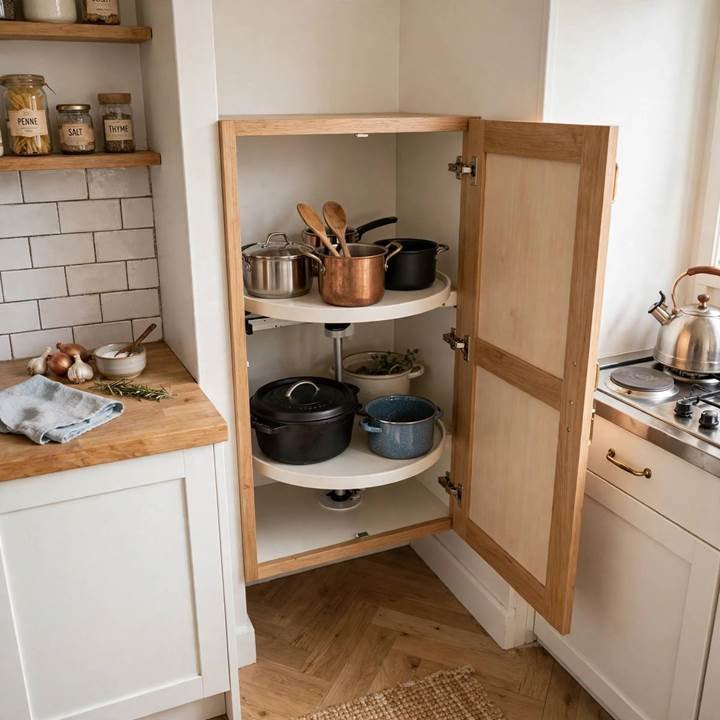
Corner cabinets often become black holes where forgotten containers live for years. A lazy Susan spins to bring every item within reach, turning dead space into useful storage. Use one for oils and sauces, another for baking supplies, or a tiered version for canned goods. Choose a model with a raised lip so bottles do not slide off. A quick spin gives you instant access, and nothing hides behind the front row anymore.
Clear Pantry Containers and Matching Labels

Visible food is food you actually use. Airtight pantry containers keep flour, rice, pasta, and snacks fresh while showing exactly what you have left. Choose square or rectangular shapes that stack neatly and fit your shelves without wasted gaps. Add simple labels with the contents and the date, so everyone in the family knows where things belong. The rows of clear jars also bring a soft, boutique grocery charm to an everyday pantry, which makes restocking feel oddly satisfying.
Tiered Shelf Risers for Cans and Spices

Flat shelves hide whatever sits behind the front row. Tiered shelf risers lift items in steps, so cans, jars, and spice bottles are visible at a glance. Place them inside cabinets or on pantry shelves, and you stop buying duplicate cumin every other month. Choose expandable styles that adjust to different shelf widths. Keep your most used spices on the lowest tier and bake only items higher up, so daily cooking stays quick and effortless.
Magnetic Knife Strip and Wall Rails

Counter space is precious, and a bulky knife block eats a surprising amount of it. A magnetic knife strip mounts to the wall and keeps blades sharp, visible, and safe from dulling drawers. Pair it with a slim rail and hooks for ladles, whisks, and measuring cups. The wall becomes a working display that looks charming in farmhouse, modern, and eclectic kitchens. Mount everything at a comfortable height, and keep sharp tools well out of reach of small children.
Under Sink Organization with Pull Out Bins

The cabinet under the sink is awkward, with pipes in the way and a wet, crowded interior. Slim under sink organizers work around the plumbing and hold cleaning sprays, sponges, and dishwasher pods in neat rows. Use a pull out caddy for daily supplies and a small bin for backups. Add a waterproof mat to catch leaks and protect the wood. Check the space every month, and toss anything that has expired or leaked.
Door Mounted Racks for Wrap, Foil, and Bags
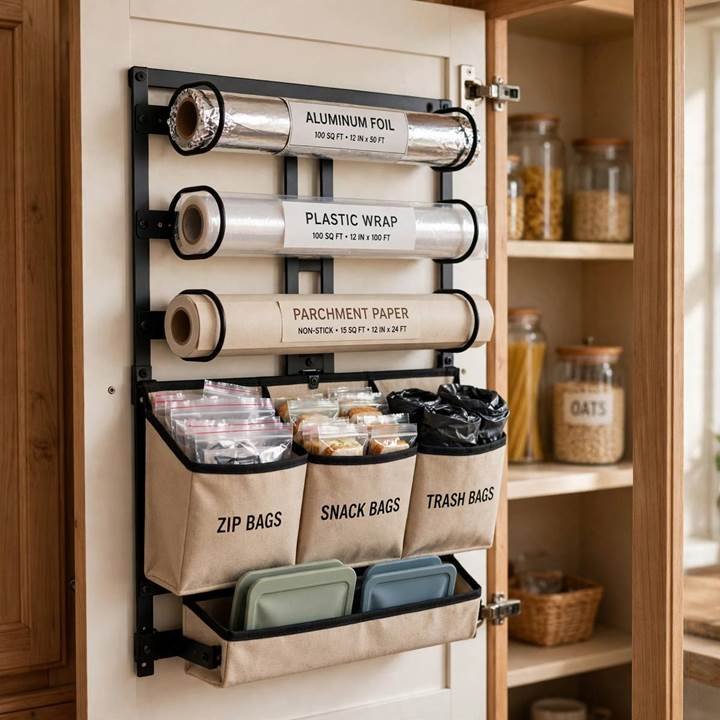
The back of a cabinet door is free real estate. A door mounted rack holds foil, wrap, parchment, and sandwich bags in one tidy spot, so drawers stay free for bigger items. Choose a slim model that does not block shelf space. Over the door baskets also work well inside pantry doors for snacks and small packets. Test the door’s clearance before installing, and confirm that hinges can support the added weight. This small change clears a surprising amount of room.
Open Shelving with Baskets and Bins
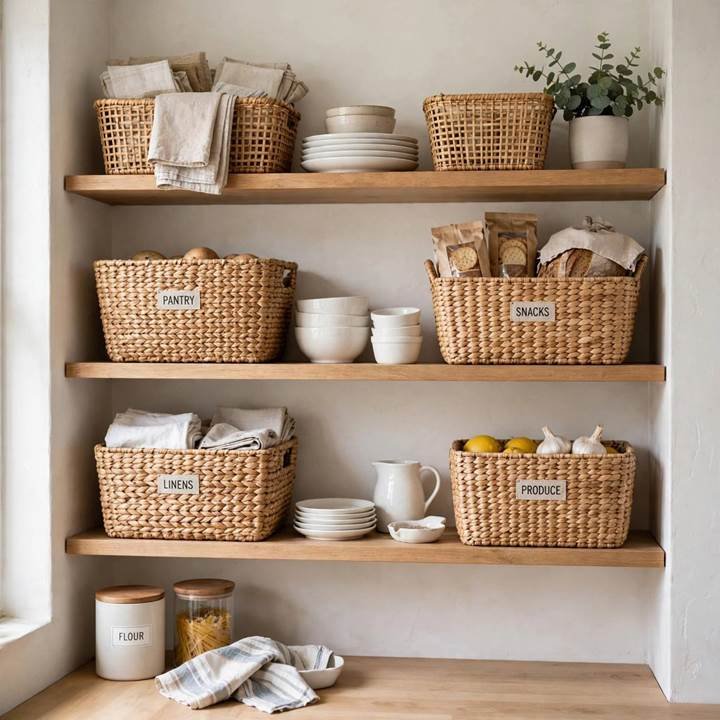
Open shelves show off your favorite pieces, but they also need structure. Woven storage baskets hide the less photogenic items, such as dish towels, takeout menus, and kids’ lunch boxes. Keep plates and bowls on the shelf for easy access, and use lidded bins for anything small or messy. Leave a little empty space between items so the look stays airy. Wipe the shelves weekly, since grease settles faster on open surfaces than most people expect.
Refrigerator and Freezer Bins
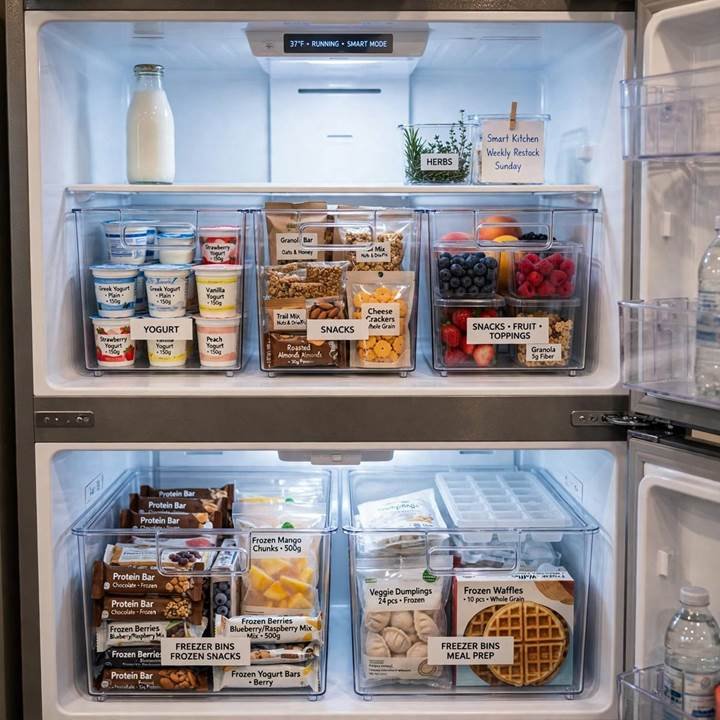
A crowded fridge wastes food and money. Clear refrigerator bins group similar items, such as yogurt, cheese, snacks, and sauces, so you can grab an entire category at once. Add a lazy Susan for condiments and a shallow bin for produce. Label each bin, and the whole family can find and return items without asking. In the freezer, upright bins or file style bags keep meats and meals visible. Clean out the fridge weekly before grocery shopping.
Appliance Garage or Hidden Counter Storage

Small appliances create the biggest counter clutter, so give them a hidden home. An appliance garage is a small cabinet with a roll up or lift up door that conceals the toaster, blender, and coffee maker. If you cannot build one, use a deep drawer or a lower cabinet with a pull-out shelf. Install a power strip inside so appliances plug in without cords snaking across the counter. The result is a calm, open surface ready for real cooking.
Rolling Cart for Flexible Storage
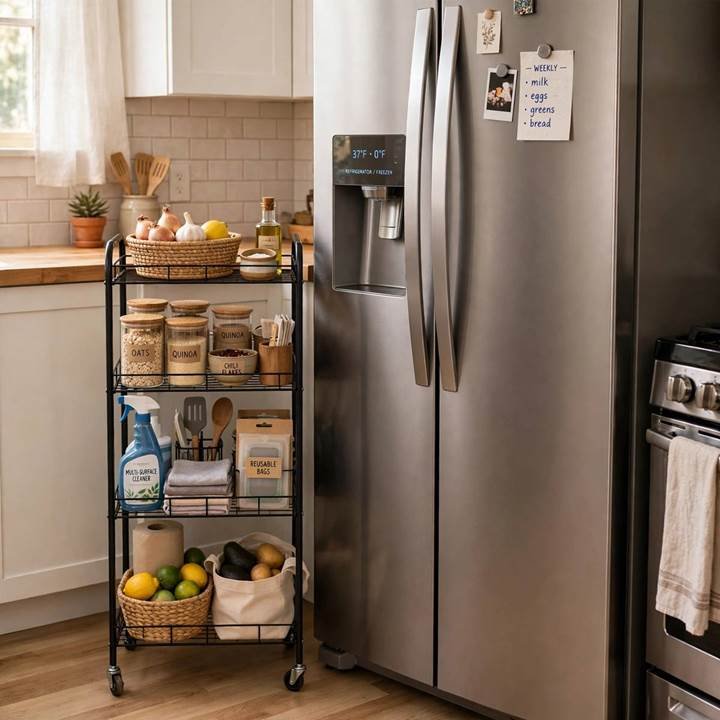
Flexibility is gold in tight kitchens. A slim rolling storage cart tucks beside the fridge or against a wall and holds oils, baking supplies, or snacks. Wheel it out when you cook, then roll it back when you finish. Choose a cart with a sturdy frame and locking casters, so it stays steady under heavy jars. This option suits renters, since it requires no installation and moves with you when you relocate.
Zones for Cooking, Baking, and Cleanup

The smartest systems follow how you move. Create kitchen zones by grouping tools where you use them: pots near the stove, mixing bowls near the prep space, and cleaning supplies near the sink. This approach cuts down on steps and prevents traffic jams when more than one person cooks. Start by emptying a single cabinet, sorting by task, and returning items in logical groups. Zones make every other organization idea work better, because everything finally has a purpose.
Kitchen Organization Ideas Comparison Table
| Item | Best For | Style/Room Type |
| Drawer Dividers | Taming utensil clutter | All kitchen styles |
| Pull-Out Shelves | Easy access to deep cabinets | Family, remodeled kitchens |
| Vertical Pan Organizers | Storing pans and baking sheets | Small, galley kitchens |
| Lazy Susans | Using corner cabinets | L-shaped, galley kitchens |
| Clear Pantry Containers | Fresh food and visibility | Pantries, open-plan kitchens |
| Tiered Shelf Risers | Cans and spices | Small pantries, cabinets |
| Magnetic Knife Strip and Rails | Freeing counter space | Modern, farmhouse |
| Under-Sink Organizers | Cleaning supplies | Apartments, rentals |
| Door-Mounted Racks | Wrap, foil, and bags | Small kitchens |
| Open Shelving with Baskets | Display with hidden storage | Cottage, casual |
| Refrigerator and Freezer Bins | Reducing food waste | Busy family kitchens |
| Appliance Garage | Clear counters | Open-plan, modern |
| Rolling Storage Cart | Flexible extra storage | Renters, tiny kitchens |
| Kitchen Zones | Efficient workflow | All kitchen layouts |
Frequently Asked Questions About Kitchen Organization Ideas
How do I organize a small kitchen with no storage?
Start by using vertical space. Add wall rails, hooks, and magnetic strips for tools, and install shelf risers inside cabinets to double usable shelf space. Door mounted racks and under shelf baskets turn unused spots into storage. A slim rolling cart adds flexible capacity without permanent changes. Declutter first, and keep only what you use weekly on the counter. Smart organization matters more than extra square footage, and small changes quickly add up.
What should I organize first in my kitchen?
Begin with the cabinet or drawer that frustrates you most. Empty it completely, wipe it down, and sort items into keep, donate, and toss piles. Then return the keepers in logical groups near where you use them. Finishing one small area builds momentum and shows you what works. After that, move on to the pantry, fridge, and counters. Tackle one zone per weekend so the project never feels overwhelming.
How do I keep my kitchen counters clear?
Give every appliance a home that is not the counter. Use an appliance garage, a deep drawer, or a lower cabinet with a pull out shelf. Keep only items you use daily on display, such as a coffee maker and a cutting board. Add a small tray for oils and salt so they look intentional. Wipe the counters nightly, and put things away immediately after use, so clutter never builds.
What is the best way to organize kitchen drawers?
Use dividers to separate tools by function, and place the most used items in the top drawer. Deep drawers suit pots, pans, and mixing bowls, while shallow ones hold utensils and gadgets. Add non slip liners to prevent sliding and rattling. Store similar items together, such as baking tools in one drawer and serving utensils in another. Review each drawer twice a year and remove anything you no longer use.
How can I organize a kitchen on a budget?
Start with inexpensive tools like bins, baskets, tiered risers, and over the door racks, which often cost under $20 each. Repurpose items you already own, such as jars, trays, and shoe organizers. Declutter before you buy anything, because you may need less storage than you think. Dollar store bins and adhesive hooks work well for renters. Focus on high impact areas first, such as the pantry and the most-used drawers.
Why Trust This Guide
This guide comes from years of writing about home design, studying how American families use their kitchens, and reviewing which storage systems hold up in daily life. Each idea balances good looks with real practicality, because an organized kitchen only works when everyone in the household can maintain it. I pay close attention to realistic budgets, easy installation, and habits that last. The goal is simple: help you build a kitchen that feels calm, works smoothly, and suits the way you actually cook.
Cost and Time to Achieve These Kitchen Organization Ideas
Most organization projects suit confident DIYers. Drawer dividers cost $15 to $60 and take minutes to place. Tiered risers and lazy Susans run $15 to $80 each and need no tools. Pantry containers and labels cost $50 to $250 for a full set and take an afternoon. Wall rails and magnetic strips cost $20 to $100 and take an hour. A full decluttering session usually takes one weekend and costs nothing but your time.
Some upgrades are better left to professionals. Built in pull out shelves typically cost $150 to $500 per cabinet installed, and a custom appliance garage can run $500 to $2,500. A full pantry system from a professional organizer or cabinet shop ranges from $1,000 to $5,000 and takes one to three weeks. Professional organizers often charge $50 to $150 per hour. Hiring a pro costs more, but it saves time and builds a system that lasts.
Final Thoughts on Kitchen Organization Ideas
The best kitchen organization ideas make daily routines feel smoother and more joyful. Whether you add drawer dividers, label pantry jars, or finally tame the corner cabinet, small changes create a space that works with you instead of against you. Pick two or three ideas that match your biggest frustrations, then build from there. If this guide helped, save it to your Pinterest board so you can return whenever you are ready to start organizing.