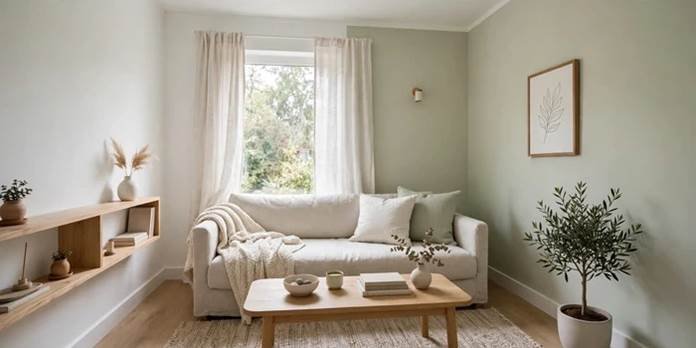
Dining Room Decor, 17 Ideas for a Welcoming Space
The best meals happen in rooms that make people want to stay. Great dining room decor does exactly that, turning a plain table and four walls into a place where conversations stretch long after dessert. You do not need a full remodel to get there. This guide shares 17 practical ideas, from warm lighting to layered table styling, that work in formal dining rooms, open plan kitchens, and tiny apartment nooks. Each idea includes specific materials, colors, and placement tips.
Why Dining Rooms Are Becoming the Heart of American Homes
Dining room decor across the US has shifted away from stiff, formal sets toward relaxed spaces built for real gatherings. Homeowners now favor warm woods, earthy greens, and mixed seating that feels collected over time. Vintage sideboards, sculptural lighting, and natural textures like linen and rattan lead current design searches and Pinterest boards. Renters and small space dwellers also embrace the trend, using removable wallpaper, plug in sconces, and flexible furniture to create a dining area with real personality.
1. Hang a Statement Chandelier Above the Table
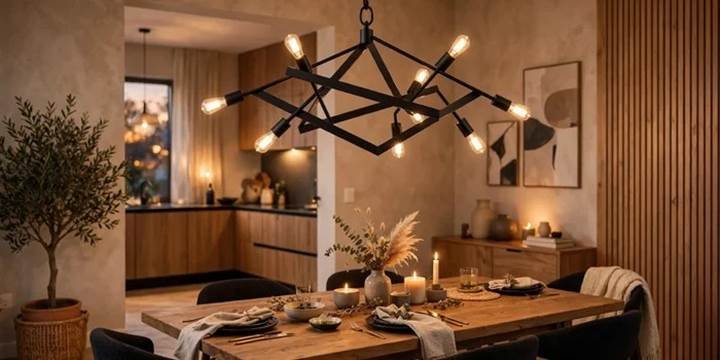
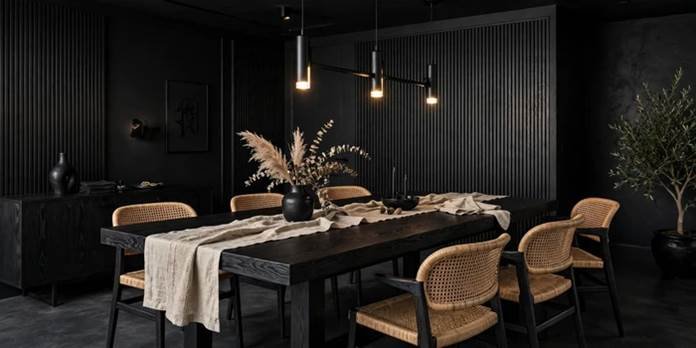
Lighting sets the tone for every meal, so start overhead. Hang a chandelier or pendant about 30 to 36 inches above the tabletop, and choose one roughly one half to two thirds the width of the table. A sculptural light fixture becomes the room’s centerpiece, whether you pick matte black rings, woven rattan, or aged brass. Add a dimmer switch so you can shift from bright homework evenings to soft candlelit dinners. Warm 2700K bulbs flatter food and faces alike.
2. Style a Centerpiece That Changes With the Seasons
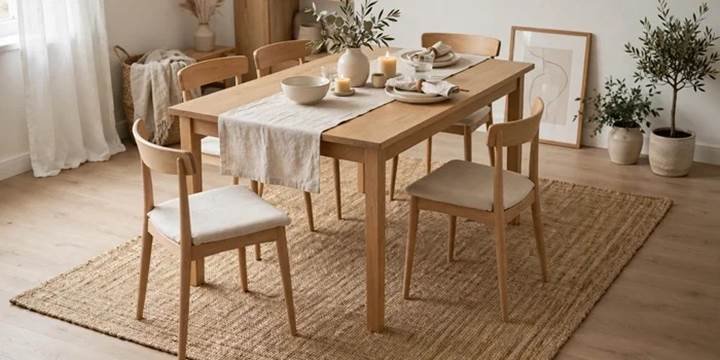
A centerpiece gives the table a focal point even when no one is eating. Fill a ceramic vase with eucalyptus, dried wheat, or fresh tulips, and set it on a wooden tray with two taper candles. Keep it low enough that guests can see each other across the table. A seasonal centerpiece keeps the room feeling fresh without new furniture. Swap in pumpkins and pinecones for fall, or lemons and olive branches for summer.
3. Layer a Rug Beneath the Dining Table
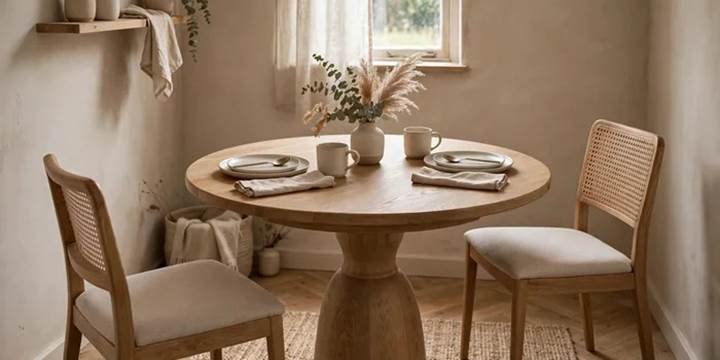
A rug anchors the table and defines the dining zone, especially in open floor plans. Choose one large enough that chair legs stay on the rug even when pulled out, which usually means adding 24 inches on every side of the table. A flat weave dining rug in wool, jute, or a washable synthetic blend handles spills and slides easily. Warm tones like rust, cream, or soft blue add color underfoot and muffle scraping chairs.
4. Mix and Match Chairs for a Collected Look
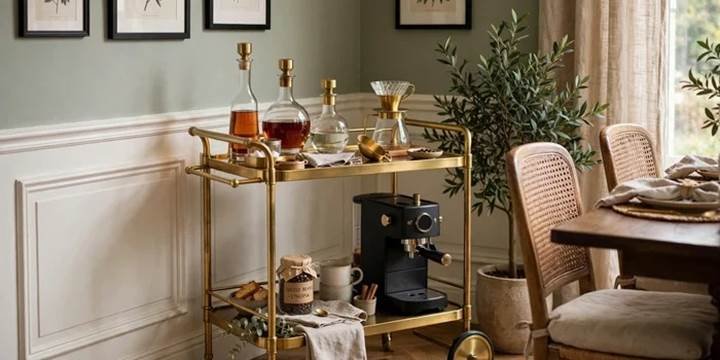
Matching sets can feel stiff, while varied chairs add instant character. Pair two upholstered armchairs at the ends with wooden side chairs along the table, and keep one common element, like a wood tone or color family, to unify the group. A mixed seating arrangement feels relaxed and layered, as if collected over years. Add slim seat cushions in linen or velvet for comfort during long dinners, and swap the covers whenever you want a fresh look.
5. Add a Sideboard or Buffet for Storage and Style
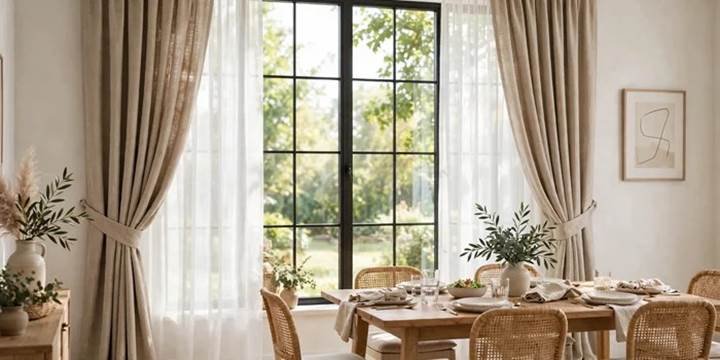
A sideboard works hard in any dining room. It stores linens, platters, and extra glasses while giving you a surface to style. Choose a mid century walnut piece, a painted white cabinet, or a vintage find with brass hardware. Top it with a lamp, a stack of books, and a bowl of seasonal fruit. A styled buffet makes the room feel complete and serves as extra space when you host holiday dinners or casual parties.
6. Create a Gallery Wall With Food and Nature Prints
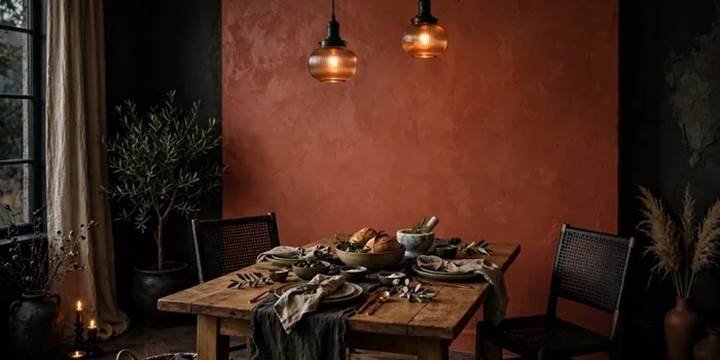
A dining room wall is the perfect canvas for art that sparks conversation. Mix framed botanical prints, vintage food illustrations, abstract paintings, and small mirrors in black, brass, and wood frames. Lay the pieces on the floor first, then trace templates onto kraft paper and tape them to the wall. This gallery wall layout helps you balance the arrangement before you hammer a single nail. Keep two inches between frames for a clean, intentional look.
7. Install Wainscoting or Picture Frame Molding
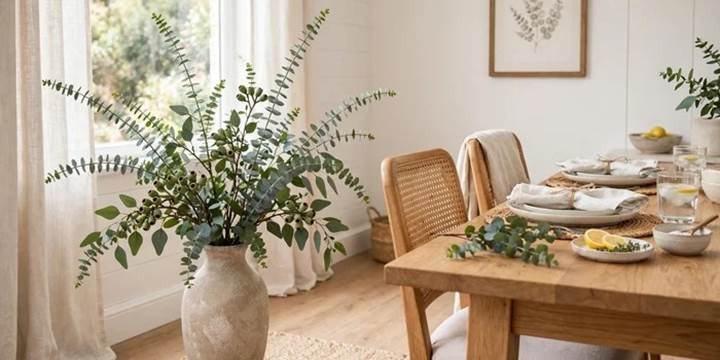
Architectural detail adds depth and a custom feel to flat walls. Install board and batten, wainscoting, or simple picture frame molding on the lower two thirds of the wall, then paint it in a deep tone like forest green, navy, or soft greige. Wall paneling brings timeless charm and protects the paint from chair scuffs. Peel and stick molding kits make this project renter friendly, while carpenters can build custom panels for a polished finish that lasts for decades.
8. Choose a Bold Paint Color or Accent Wall
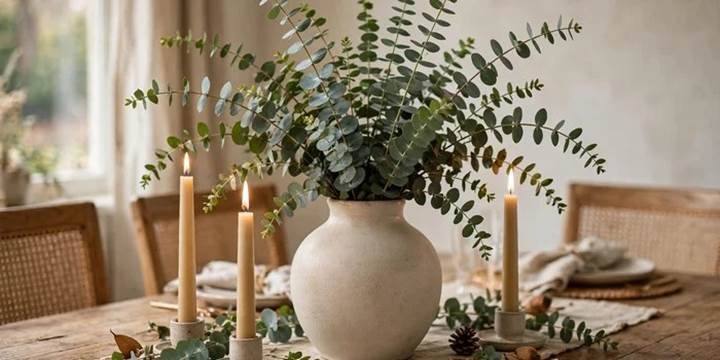
Color changes the mood of a dining room faster than any furniture swap. Deep olive, terracotta, or inky blue wraps the room in warmth and makes candlelit dinners feel special. A rich accent wall behind the sideboard or table adds drama without overwhelming a smaller space. Choose an eggshell finish, which hides imperfections and wipes clean easily. Test large swatches on two walls, and view them morning and evening before you commit to a gallon.
9. Add Layered Window Treatments
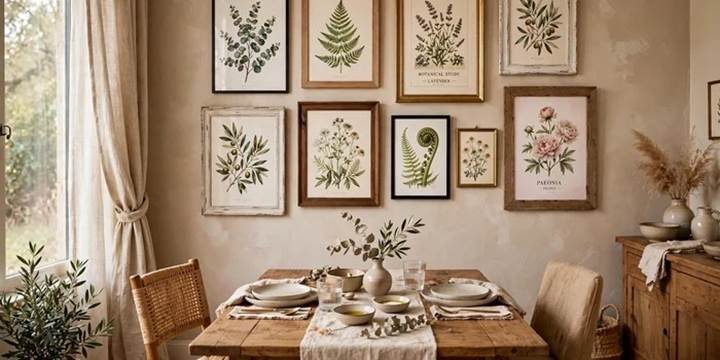
Curtains soften the room and frame your view. Hang the rod four to six inches below the ceiling and extend it beyond the window frame, so the fabric stacks off the glass. Floor length linen curtains in oatmeal, white, or soft sage filter daylight beautifully and add a breezy, relaxed feel. For privacy, layer sheer panels behind heavier drapes, or add woven bamboo shades. Let the hems just touch the floor for a clean, tailored finish.
10. Style a Linen Table Setting With Texture
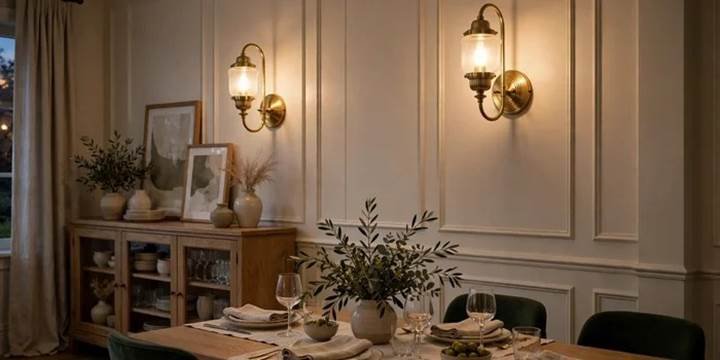
A thoughtfully set table makes everyday meals feel special. Start with a linen table runner or placemats in a neutral shade, then layer stoneware plates, cloth napkins, and simple glassware. Add brass or matte black flatware for contrast. Layered table settings bring warmth and sensory detail, from the soft crumple of linen to the cool weight of ceramic. Keep the palette tight, and let one accent color, like terracotta or olive, repeat across napkins and dishes.
11. Bring in Greenery With Plants and Branches
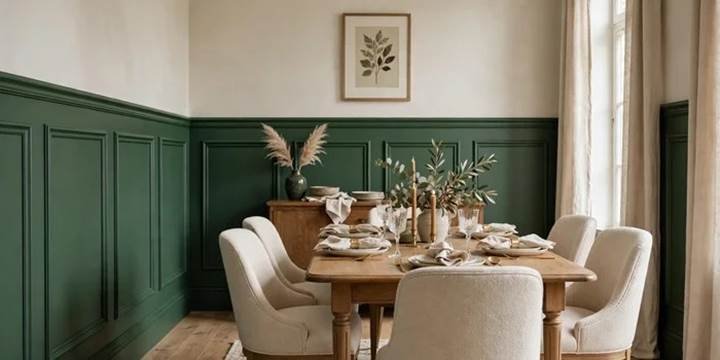
Greenery adds life, softness, and fresh color to a room full of wood and fabric. Place a tall olive tree or fiddle leaf fig in a corner, and set a trailing pothos on the sideboard. For a low effort option, arrange long branches in a floor vase, such as eucalyptus or cherry blossom, for height and movement. Choose pots in ceramic or woven baskets that match your palette, and rotate plants so each side gets even light.
12. Use a Round Table for Conversation and Flow
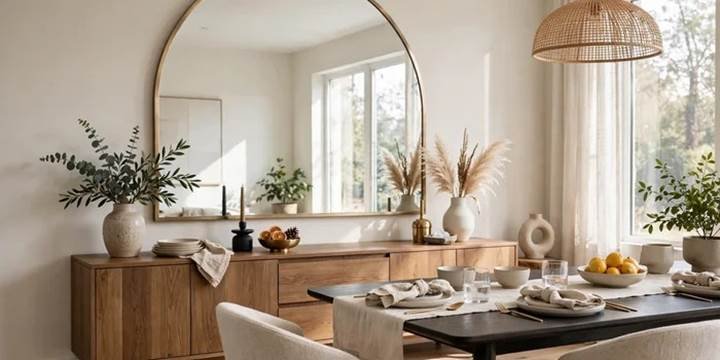
Round tables encourage conversation because everyone faces each other, with no one stuck at the far end. They also fit small dining rooms better, since curved edges ease traffic flow. Choose a pedestal base so chairs tuck in neatly and legs never get in the way. A round dining table in light oak or white marble feels airy and modern. Add a lazy Susan in the center for easy sharing of family style dishes.
13. Add a Statement Mirror to Brighten the Room
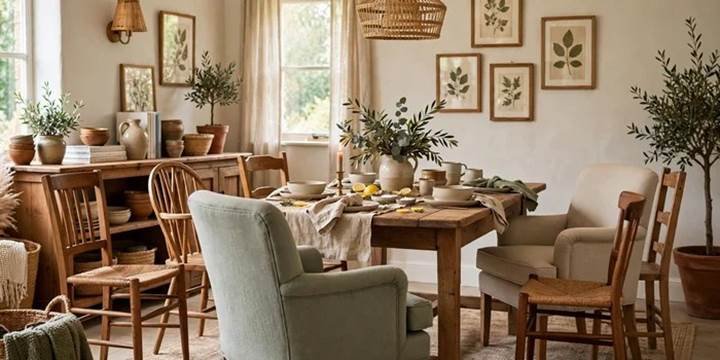
A large mirror bounces daylight and candlelight across the room and makes the space feel bigger. Lean an oversized floor mirror against the wall, or hang a round or arched one above the sideboard. Pick a brass or black frame for a modern look, or a carved wood frame for vintage charm. Place the mirror opposite a window to double the natural light. At night, it doubles the glow of candles, making every dinner feel festive.
14. Install Wall Sconces for Soft Ambient Glow
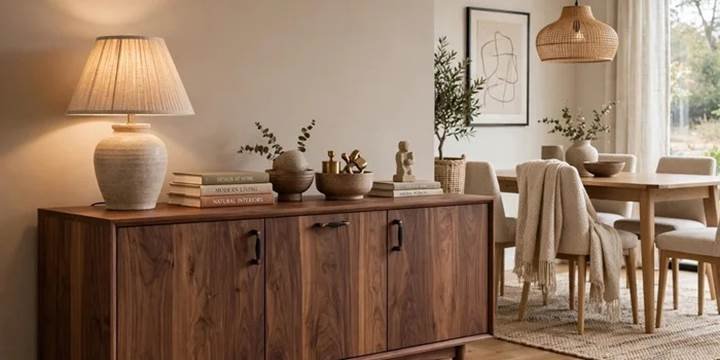
Sconces add a warm, layered glow without taking up table or floor space. Mount a pair on either side of the sideboard or mirror, and choose fixtures with fabric shades or frosted glass to soften the light. Plug in versions work perfectly for renters, hiding cords with simple cord covers. Wall sconces make evenings feel relaxed and elegant. Pair them with a dimmer or smart bulbs, and you control the mood with a single tap.
15. Build a Built-In Bar Cart or Coffee Station
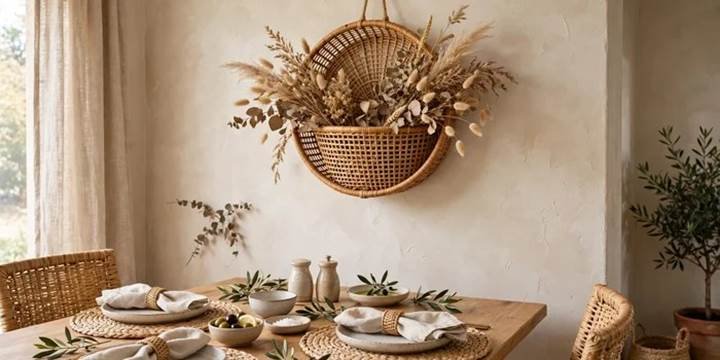
A small beverage station adds function and charm to a dining room. Park a gold or wooden bar cart in a corner, and stock it with glass decanters, coupe glasses, and a small tray for lemons and herbs. Or set up a coffee and tea station with ceramic mugs, a kettle, and a jar of loose leaves. This idea keeps drinks within reach and gives you another place to display pretty objects you love.
16. Add Texture With Woven and Natural Materials
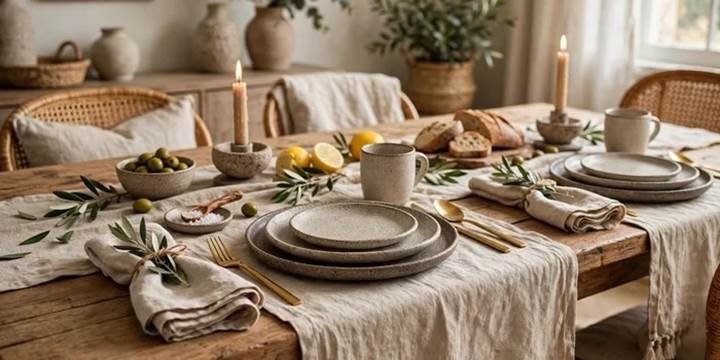
Natural materials ground a dining room and make it feel calm. Hang a rattan wall basket as art, set a wooden bowl filled with lemons on the table, and use seagrass placemats for a tactile touch. Woven textures bring warmth and an organic feel that suits farmhouse, coastal, and modern spaces alike. Balance the rough surfaces with smooth ceramics and soft linen so the look stays layered, not rustic overload.
17. Light Candles for Warm Evening Ambiance

Candlelight changes the entire mood of a meal. Set a pair of taper candles in brass holders, or group three pillar candles of different heights on a tray at the table’s center. Choose unscented candles near food, so fragrance does not compete with flavors. Candlelit ambiance slows conversation and makes guests linger. Keep the flames away from flowers and linens, and snuff them out before leaving the room for any reason.
Dining Room Decor Ideas at a Glance
| Item | Best For | Style/Room Type |
| Statement chandelier | Focal lighting | Modern or traditional, Formal dining room |
| Seasonal centerpiece | Fresh, changeable style | Casual, Any dining table |
| Dining room rug | Defining the zone | Neutral or vintage, Open-plan spaces |
| Mixed chairs | Collected character | Eclectic, Family dining room |
| Sideboard or buffet | Storage and display | Mid-century or classic, Dining room |
| Gallery wall | Personal art display | Eclectic, Dining room wall |
| Wainscoting or molding | Architectural detail | Traditional or transitional, Dining room |
| Bold paint or accent wall | Mood and drama | Moody or modern, Small dining room |
| Layered curtains | Light control and softness | Classic, Any room with windows |
| Linen table setting | Everyday elegance | Farmhouse or modern, Dining table |
| Plants and branches | Fresh color and height | Boho or natural, Corners and sideboards |
| Round dining table | Conversation and flow | Modern, Small dining room |
| Statement mirror | Brightening and enlarging | Glam or modern, Above a sideboard |
| Wall sconces | Ambient evening glow | Any style, Renter-friendly spaces |
| Bar cart or coffee station | Hosting convenience | Eclectic, Corner or nook |
| Woven and natural textures | Warm, organic feel | Coastal or farmhouse, Dining room |
| Candlelight | Intimate dinners | Any style, Dining table |
Frequently Asked Questions About Dining Room Decor
How do I decorate a dining room on a budget?
Start with lighting, color, and linens, since they create the biggest change for the lowest cost. Paint one wall, swap harsh bulbs for warm ones, and add a linen runner and simple centerpiece. Shop thrift stores and flea markets for frames, vases, and chairs. Rearranging furniture costs nothing and can open up the room. Add one piece at a time, and build the look slowly so everything feels intentional and cohesive.
What should I put on my dining room walls?
Choose art that suits your style and sparks conversation. Framed botanical prints, large abstract paintings, a gallery wall, or a statement mirror all work well. Wall sconces, shelves, and woven baskets add texture and function. Hang pieces so the center sits about 57 inches from the floor, and keep the art slightly lower above a sideboard. Mix materials like wood, brass, and ceramic for a layered, collected look.
How do I make a small dining room look bigger?
Use light colors, mirrors, and slim furniture to open the space. A round pedestal table saves room and improves flow, while a large mirror bounces light deeper into the room. Hang curtains high and wide to lengthen the walls, and choose a rug that is large enough to unify the space. Avoid heavy centerpieces, and keep surfaces tidy so the room feels calm and open.
What color is best for dining room decor?
Warm, earthy colors like terracotta, olive green, deep navy, and soft cream work beautifully because they flatter food and skin tones. Moody shades create intimate evening dinners, while light neutrals feel fresh and airy. Pick a color that matches how you use the room most often. Test swatches on the wall and look at them in both daylight and lamplight before you buy paint for the whole space.
How high should I hang a chandelier over a dining table?
Hang the bottom of the chandelier about 30 to 36 inches above the tabletop in a standard eight foot ceiling room. Add roughly three inches for each additional foot of ceiling height. This keeps the fixture visible without blocking sightlines across the table. The chandelier should measure about one half to two thirds the width of the table. Install a dimmer so you can adjust brightness for dinner, homework, or entertaining.
Why Trust This Guide
This guide draws on years of hands on experience styling real dining rooms, from compact apartment nooks to large family spaces across the US. Every idea has been tested in homes with varied lighting, layouts, and budgets. Cost figures reflect current national averages for materials and labor, and the advice favors lasting style over passing trends. The goal is simple: help you create a dining space that feels warm, welcoming, and ready for everyday meals and special gatherings alike.
Cost and Time to Achieve These Dining Room Decor Ideas
DIY Costs and Time
Many of these ideas are simple weekend projects. Centerpieces, candles, linens, plants, and baskets typically cost $15 to $80 per item and take under an hour to place. A mirror or sconce pair runs $60 to $250, and a dining rug costs $100 to $500. Peel-and-stick molding or paint for an accent wall costs $50 to $200 and takes one weekend. A full DIY refresh usually totals $300 to $1,200.
Hiring a Professional
Professional help makes sense for wainscoting, chandelier wiring, and custom window treatments. Painters in the US typically charge $2 to $6 per square foot, so a dining room runs roughly $400 to $1,500. Electricians charge $50 to $130 per hour for fixture installation, and carpenters often charge $1,000 to $3,500 for paneling. Interior designers average $100 to $300 per hour. Most professional projects take two to seven days.
Create a Dining Space Worth Gathering In
Great dining room decor grows from small, thoughtful choices. Start with warm lighting, a beautiful centerpiece, and a color that makes you smile, then layer in texture, art, and candles over time. You do not need to try every idea here. Choose a few that fit your space and your life, and let the room evolve with each meal you share. Save this guide to your favorite Pinterest board so you can return whenever inspiration strikes.