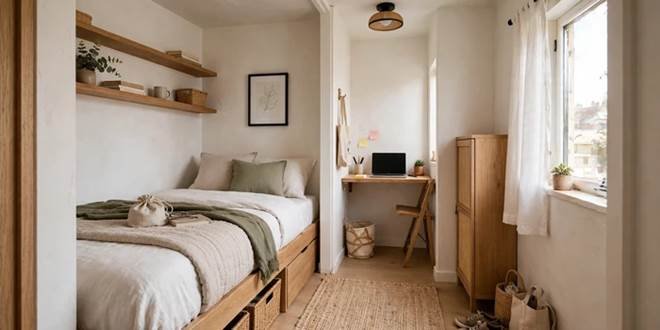
15 Trending Basement Stylish Bedroom Ideas
Turning an underused basement into a real bedroom sounds tricky, but the right basement bedroom ideas make it one of the coziest rooms in the house. Low ceilings, small windows, and concrete walls don’t have to mean a dark, unfinished feeling space. With smart lighting, warm textures, and a few structural tweaks, a basement can rival any upstairs suite. This list goes beyond paint swatches to cover the practical fixes moisture, airflow, and layout that most roundups skip entirely.
Across the US, homeowners are converting basements into guest suites, teen retreats, and rental-ready apartments as square footage gets more expensive to add. Real estate agents note that finished basements now boost resale value in many markets, especially when the space includes a legal bedroom with proper egress. This shift has pushed basement bedroom ideas toward warmer, more intentional design—less “unfinished storage room,” more “the guest room everyone fights over.”
Egress Window Upgrade
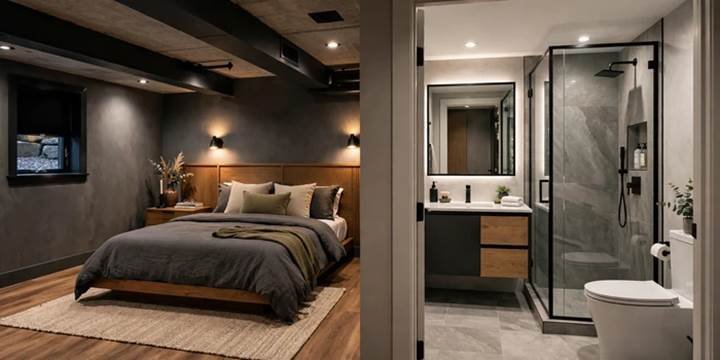
Before anything else, a basement bedroom needs a code compliant egress window, and this single change transforms the entire feel of the room. A larger window well brings in real daylight, meets fire safety requirements, and instantly makes the space feel less like a cellar. Many homeowners frame it with a deep sill for plants or books. This is the foundation every other basement bedroom idea builds on, so it’s worth prioritizing first.
Moody Color Palette
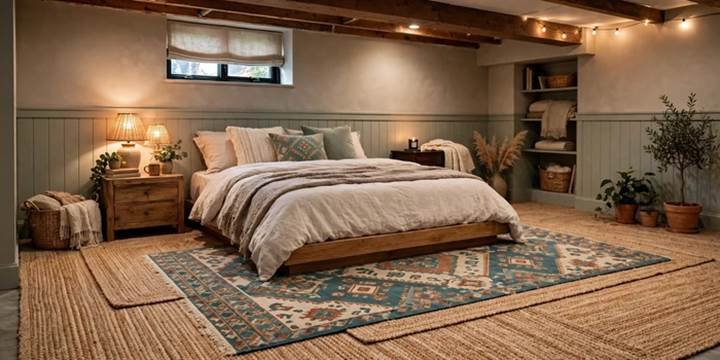
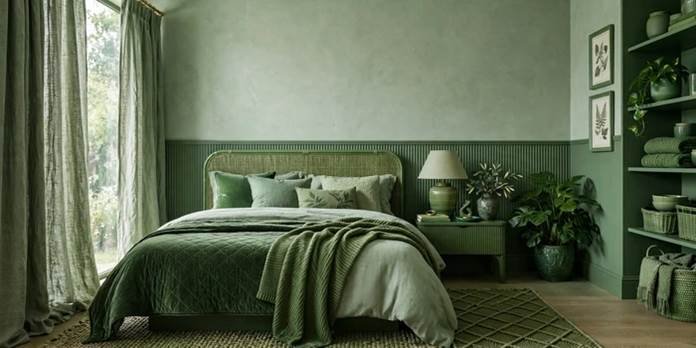
Instead of fighting low natural light with stark white, lean into a moody color palette that feels intentional rather than dim. Deep charcoal, forest green, or warm terracotta on the walls creates a cocoon like retreat that photographs beautifully and hides shadows better than pale tones. Pair dark walls with brass or warm-toned hardware to keep the room from feeling heavy. This approach has become a signature look in modern basement bedroom design.
Layered Lighting Plan
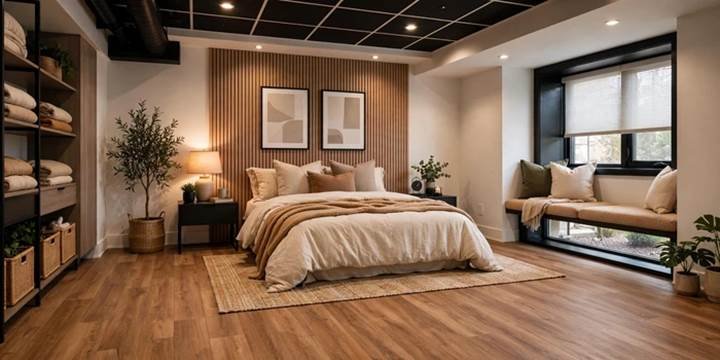
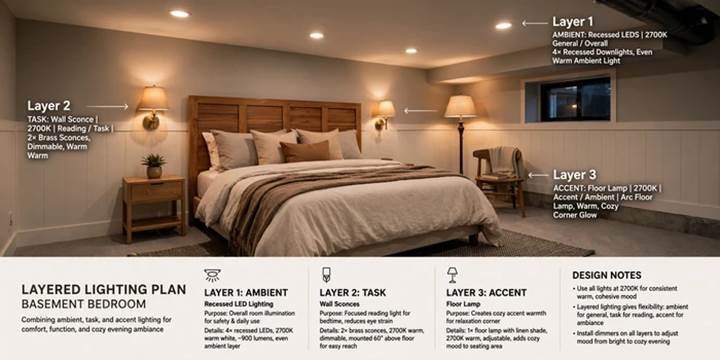
Basements rarely get enough overhead light alone, so a layered lighting plan is essential rather than optional. Combine recessed ceiling lights, a statement floor lamp, and warm toned bedside sconces to eliminate flat, clinical brightness. Dimmer switches let the room shift from bright and functional during the day to soft and restful at night. Good lighting does more to make a basement bedroom feel finished than almost any other single upgrade.
Warm Wood Flooring
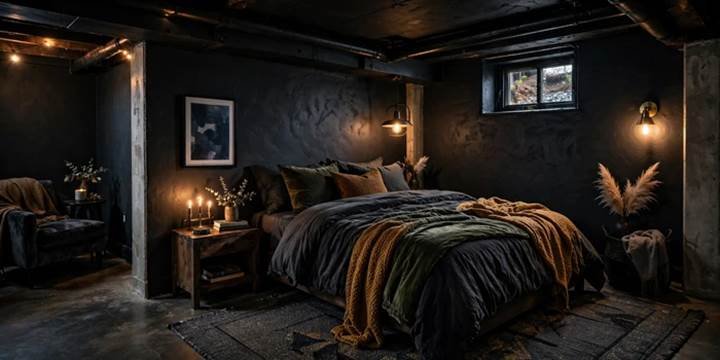
Concrete floors read cold, both literally and visually, which is why warm wood look flooring is a favorite fix among basement renovators. Engineered hardwood or luxury vinyl plank in a honey or walnut tone adds instant warmth underfoot and visually raises the ceiling line. These materials also resist moisture better than solid hardwood, making them a practical match for below-grade spaces. Add a rug on top for extra softness in colder months.
Layered Area Rugs
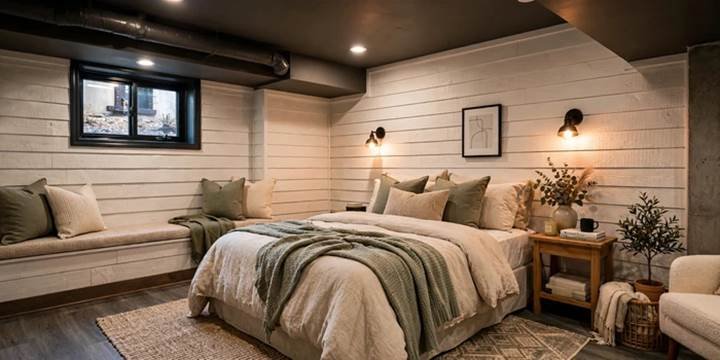
Once flooring is in place, layered area rugs soften the acoustics and add texture that basements typically lack. A jute or wool base rug topped with a smaller patterned piece creates visual depth and muffles footsteps from the level above. This trick works especially well in basement bedrooms with concrete subfloors, where sound tends to bounce. Choose low-pile options so the layers stay easy to vacuum and maintain.
Built In Wardrobe Wall
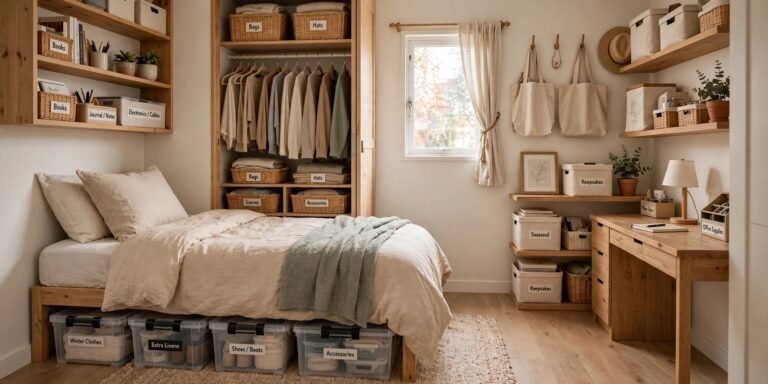
Basements rarely come with closets, so a built in wardrobe wall solves storage without eating into limited floor space. Floor to ceiling cabinetries along one wall keeps clothing, linens, and seasonal items organized while giving the room a custom, finished look. Adding closed doors also helps control dust and humidity around fabric storage, which matters more below grade. This idea consistently ranks among the most requested basement bedroom upgrades.
Dehumidifier and Moisture Control
No basement bedroom idea matters much if moisture isn’t handled first, which is why a dedicated dehumidifier and moisture control plan belongs on every checklist. A whole room or whole basement dehumidifier keeps humidity below the level where mold and musty odors take hold. Vapor barriers behind drywall and a sealed subfloor add another layer of protection. This unglamorous step is what keeps a beautifully designed basement bedroom feeling fresh long term.
Cozy Reading Corner
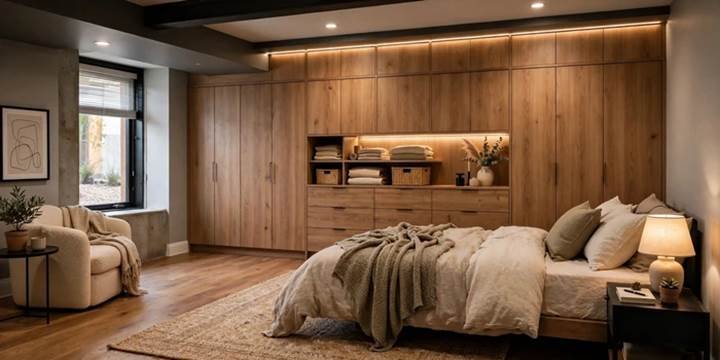
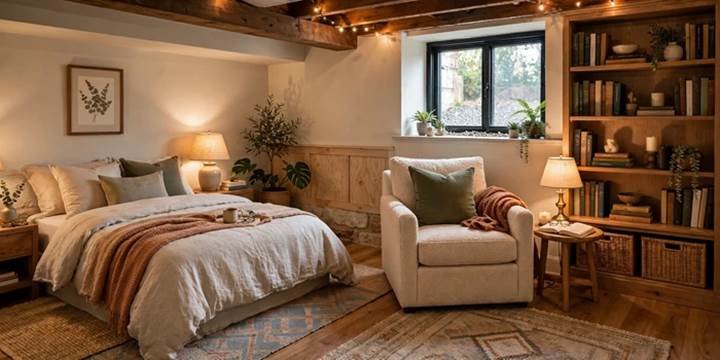
Tucking a cozy reading corner into an underused basement corner turns dead space into the room’s favorite spot. A slipper chair, a small side table, and a warm-toned reading lamp are all it takes to create a retreat that feels separate from the sleeping area. Adding a bookshelf or floating shelves nearby makes the corner feel curated rather than accidental. This zone works especially well near the egress window for natural light.
Statement Headboard Wall
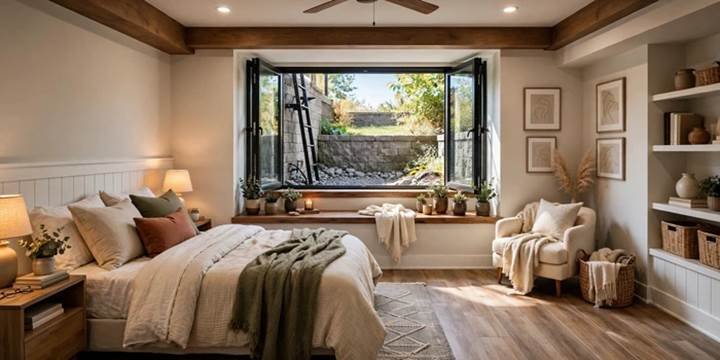
A statement headboard wall gives the bed visual weight in a room that can otherwise feel low and boxy. Wood paneling, a padded upholstered headboard, or a bold wallpaper panel behind the bed draws the eye upward and anchors the whole layout. This idea photographs particularly well for Pinterest and works in nearly any basement bedroom style, from modern minimalist to rustic farmhouse. It’s one of the highest-impact, lowest-cost basement bedroom ideas on this list.
Ceiling Treatment
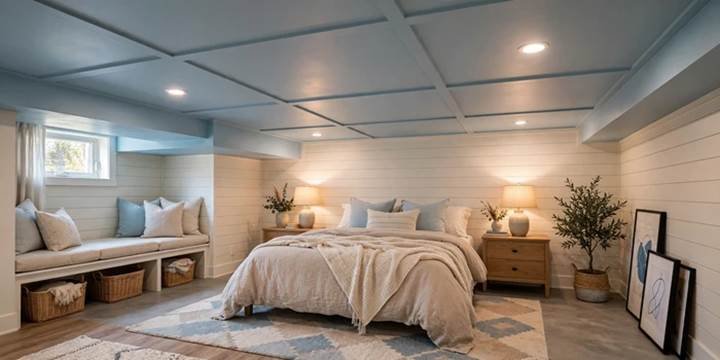
Low ceilings are the biggest visual challenge in basements, so a thoughtful ceiling treatment makes a real difference. Painting the ceiling the same tone as the walls blurs the transition line and makes the room feel taller than it is. Where ductwork is exposed, painting pipes matte black turns a flaw into an intentional industrial detail. Either approach beats a standard white drop ceiling, which tends to emphasize low clearance.
Zoned Sleeping and Lounge Layout
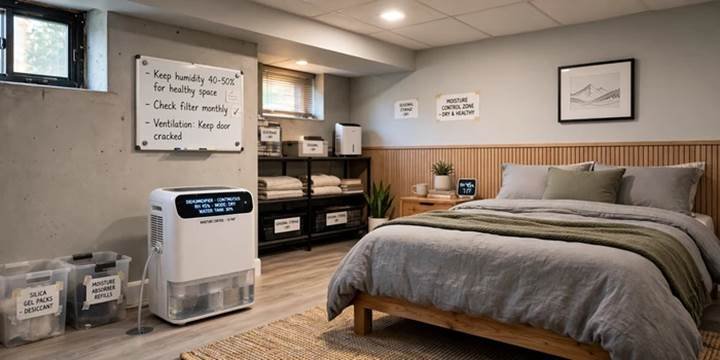
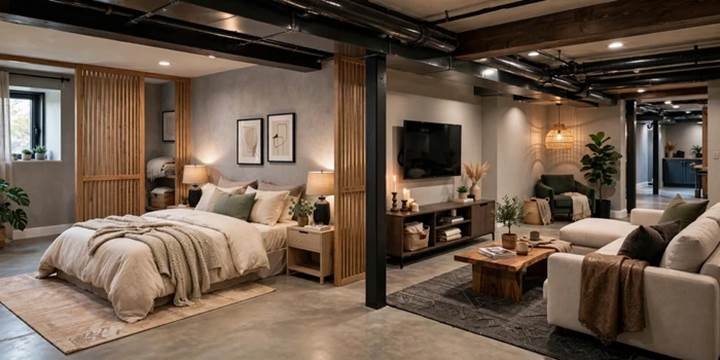
In larger basements, a zoned sleeping and lounge layout makes the space function like a small suite rather than one flat room. A rug, a low bookshelf, or a curtain can visually divide the sleeping area from a small seating or workspace nook. This layout is especially popular for teen bedrooms and guest suites that need to double as a hangout space. Zoning also makes furniture arrangement easier in oddly shaped basement footprints.
Textured Wall Paneling
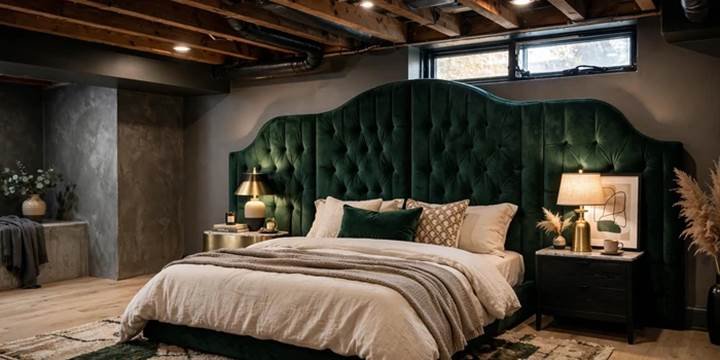
Bare basement walls benefit enormously from textured wall paneling, which adds architectural interest without requiring major structural work. Shiplap, board and batten, or slatted wood panels bring warmth and dimension to an otherwise flat surface. These treatments also help disguise minor wall imperfections common in below grade construction. Paired with warm paint tones, textured paneling is one of the most Pinterest-friendly basement bedroom ideas available right now.
Basement Ensuite Bathroom
For guest suites or rental ready basements, adding a basement ensuite bathroom significantly boosts both comfort and resale appeal. Even a compact three quarter bath with a shower, toilet, and vanity makes the space feel like a true private retreat rather than a converted storage room. This addition requires plumbing work and permits, so it’s typically a bigger investment, but it’s consistently the upgrade guests and buyers notice first.
Smart Heating Control
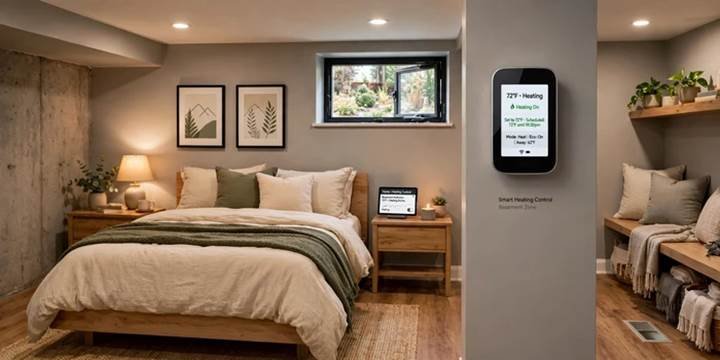
Basements run cooler than the rest of the house, so smart heating control keeps a basement bedroom comfortable year round. A dedicated smart thermostat, radiant floor heating, or a stylish space heater with a timer prevents the space from feeling chilly at night. Some homeowners add a small zoned mini-split system for independent temperature control. Comfort like this is what turns a basement bedroom from a backup room into a genuinely preferred one.
Soundproofing for Privacy
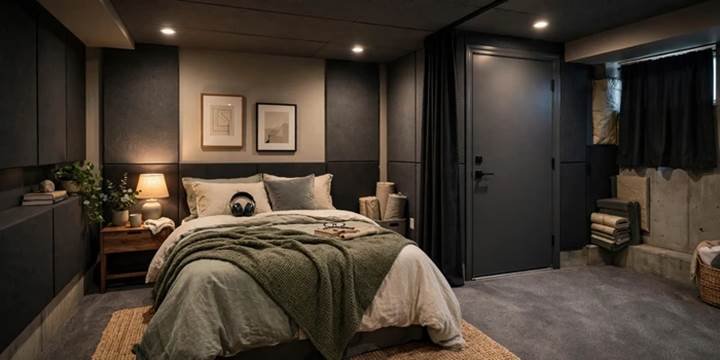
Because basements share ceilings with active living spaces above, soundproofing for privacy is worth building into the plan early. Insulation between joists, acoustic drywall, and a layered rug all reduce noise transfer in both directions. This matters most for basement bedrooms used by teens, guests, or as a rental unit where privacy is a priority. Quiet, well-insulated basements consistently feel more finished and more livable.
Frequently Asked Questions
How do I make a basement bedroom not feel dark?
Start with a proper egress window, since natural light does more than any paint color to brighten the space. Layer lighting with overhead fixtures, floor lamps, and warm bulbs rated around 2700K to avoid a harsh, clinical glow. Light flooring or a light-toned area rug also bounces available light around the room. Mirrors placed opposite the window help too, reflecting daylight deeper into the space throughout the day.
Is it legal to have a bedroom in a basement?
In most US jurisdictions, a basement room can legally be called a bedroom only if it meets code requirements, including a code sized egress window, minimum ceiling height, and proper smoke detectors. Requirements vary by city and state, so checking local building codes before finishing the space is essential. A permitted basement bedroom also tends to add more resale value than an unpermitted conversion, since buyers and appraisers can count it as living space.
How much does it cost to convert a basement into a bedroom?
Costs vary widely depending on existing conditions, but most basement bedroom conversions in the US range from a few thousand dollars for a cosmetic refresh to well over twenty thousand for a full renovation with an egress window and ensuite bathroom. Flooring, insulation, drywall, and lighting make up the bulk of a mid-range budget. Getting quotes from a local contractor for permits and egress work early helps avoid budget surprises later.
How do I stop my basement bedroom from feeling damp?
A dedicated dehumidifier is the fastest fix, keeping indoor humidity in the 30 to 50 percent range where mold and musty smells can’t take hold. Beyond that, check that gutters and grading direct water away from the foundation outside, since exterior drainage issues are often the real source of dampness. Sealing the subfloor and using moisture-resistant materials like vinyl plank flooring adds another layer of long-term protection for the room.
What colors make a basement bedroom feel cozy instead of cave-like?
Contrary to the instinct to go all white, deep warm tones like charcoal, olive, terracotta, or espresso brown often make basements feel more intentional and cozy rather than smaller. These colors work with limited natural light instead of fighting it, since white walls tend to look gray and flat under artificial lighting alone. Balancing dark walls with warm wood tones and soft textiles keeps the overall effect inviting rather than heavy.
Why Trust This Guide
This guide was put together by a home design writer who has spent years researching, testing, and writing about real home renovation projects, including basement conversions, with a focus on practical fixes homeowners can actually execute. Every idea here was chosen for being realistic on a typical US home budget, not just visually appealing in photos. Recommendations are cross-checked against general US building code principles and common contractor guidance, though local codes should always be confirmed with a licensed professional before starting structural or electrical work.
Cost and Time to Achieve
A cosmetic basement bedroom refresh, covering paint, lighting, rugs, and a headboard wall, typically costs between 500 and 2,500 dollars as a DIY project and can be completed over a single weekend. Mid range updates like wood-look flooring, wall paneling, and a dehumidifier system usually run 3,000 to 10,000 dollars and take one to three weeks, especially if flooring installation is hired out. Full conversions involving an egress window and ensuite bathroom generally require licensed professionals for plumbing and structural work, with costs ranging from 15,000 to 40,000 dollars or more and timelines stretching four to ten weeks depending on permitting.
Conclusion
A basement doesn’t have to feel like an afterthought. With the right lighting, warmth, and a few structural essentials handled early, these basement bedroom ideas can turn unused square footage into one of the most restful rooms in the house. If any of these sparked ideas for your own space, save this guide or pin your favorites so they’re easy to find when you’re ready to start planning.